We awake quite early in our shared accommodation, a mix of cows, cockerels and calls to pray don’t necessarily aid sleep! A good breakfast, cooked by our host and some Turkish pasty like provisions for lunch. A last look at our accommodation and of course the puppies before we set off back through the village. Almost over shooting our first turn to the left, there is a discrete hand made ladder stile over a brick wall. We allow a local to go through. The lady has so much grace climbing up and over, even though she is carrying a bundle of wood and has far less substantial shoes than us! We are soon in an arable area crossing fields. Very dry and it is hard to see what could grow in this situation.

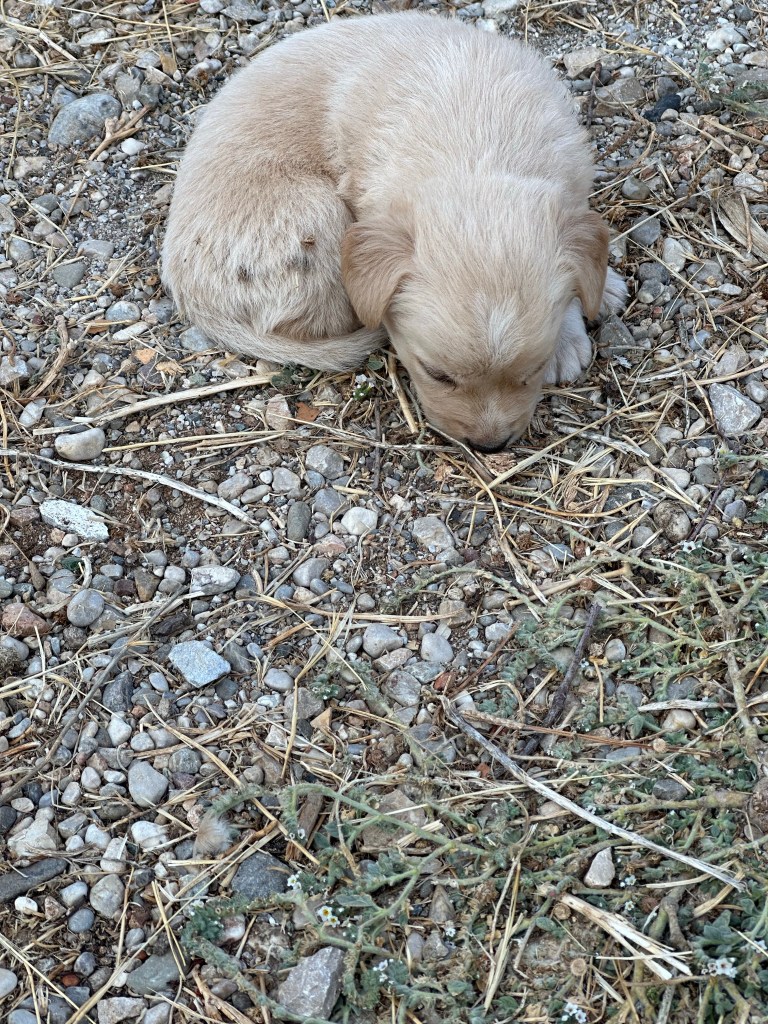


We are crossing a plain which has many man made terraces, although it is quite difficult to discern their purpose. We are still high up and our path keeps reasonably level with some bits of ascent and descent as it winds its way around the mountain. We can glimpse the sea below. One of the most significant aspects are the numerous bee hives and today we also see beekeepers setting out to harvest the honey. Thank you to Paul for his photo montage. We even got to taste some as we went passed somebody operating a makeshift extracted, outside his house.

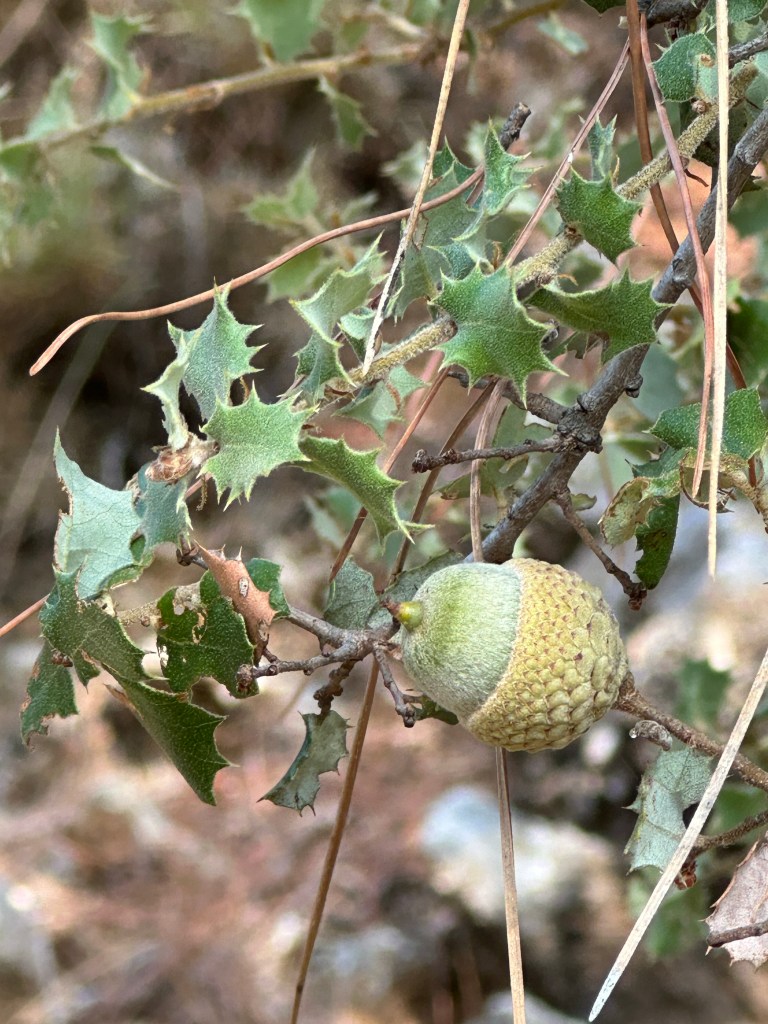
Our walk is varied by the type of rocky dry track and occasional pine forest , not the most exciting bit we make steady progress and there are some interesting plants to observe. We have noticed a low shrub with leaves very much like holly but then a taller version and it has an acorn so clearly a type of oak. It is in fact Kermes Oak , Quercus coccifera – which is part of the Ilex genus – hence the holly connection. A great example of a xerophytic adaption to the climate.
We stop at a road side house with a courtyard where we can eat our lunch and our guide transforms again into a waiter and orders our drinks from the ‘supermarket’ at the side of the house- the tiniest of corner shops. However the cold drink is great.

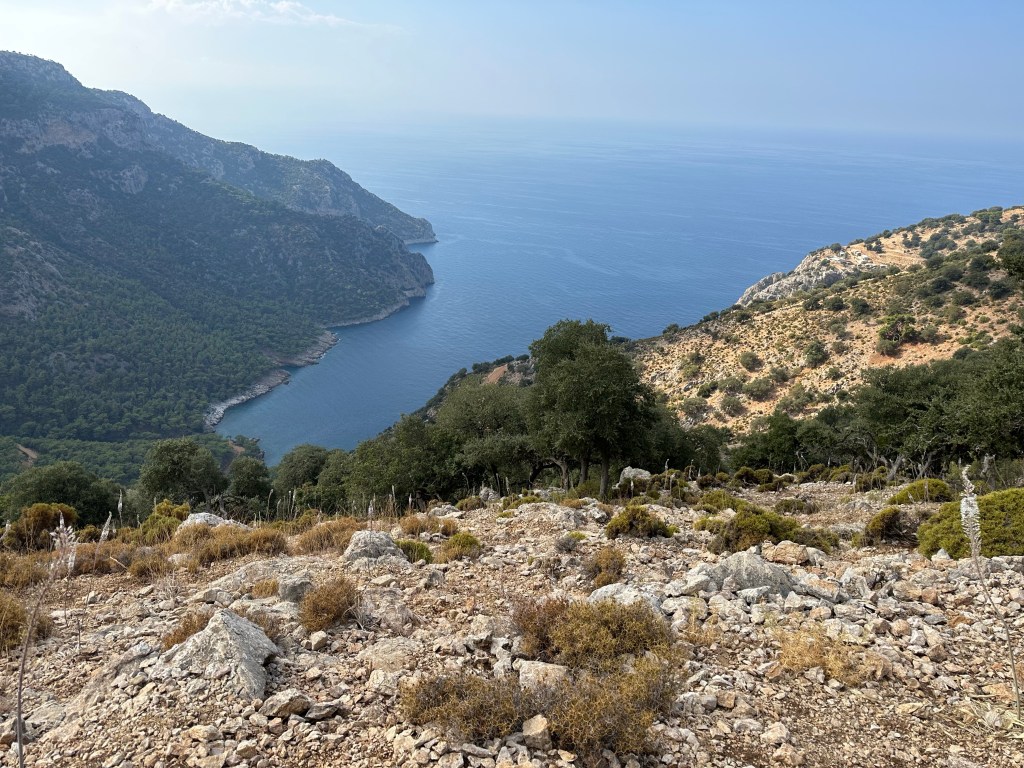

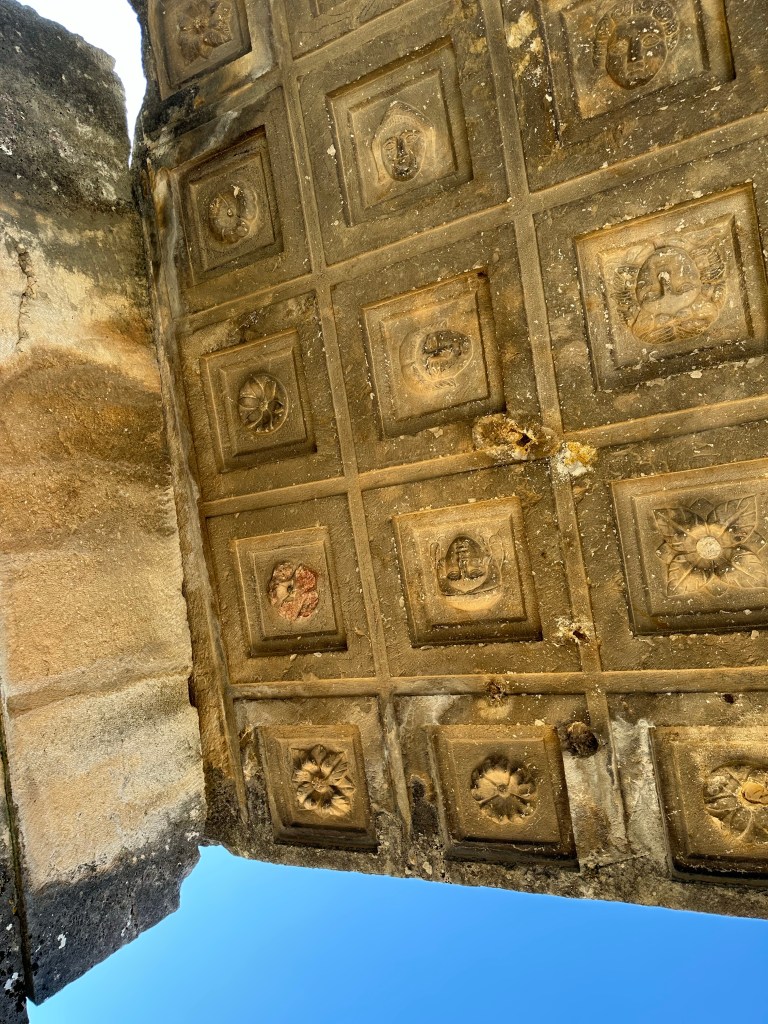
After this stop we are dropping down to Sidyma Ancient City. Once inhabited by Lycians it also has Roman and Byzantine remains.
The current village is set in it’s midst and we walk by houses to fields with significant ruins, mostly tombs which have very particular shaped roofs. These small tombs would be for one person but after ten years somebody else could have the space. I’m not sure we ever quite found out what happened to the remains of the original occupation. Some more elaborate tombs were for family groups- they are really large but apparently important people had much larger final dwelling places.
As we entered the village we could see a really deep well which still had a bucket attached and also observed a style of grain grinding mechanism significantly different than we might expect.


The gateway to the city was significantly small which reflects it’s comparative importance. One very interested local inhabitant did come to greet us with a plate of grapes she had just picked. We eat quite a lot but Nebil did feed the rest to a cow tethered in the vicinity !

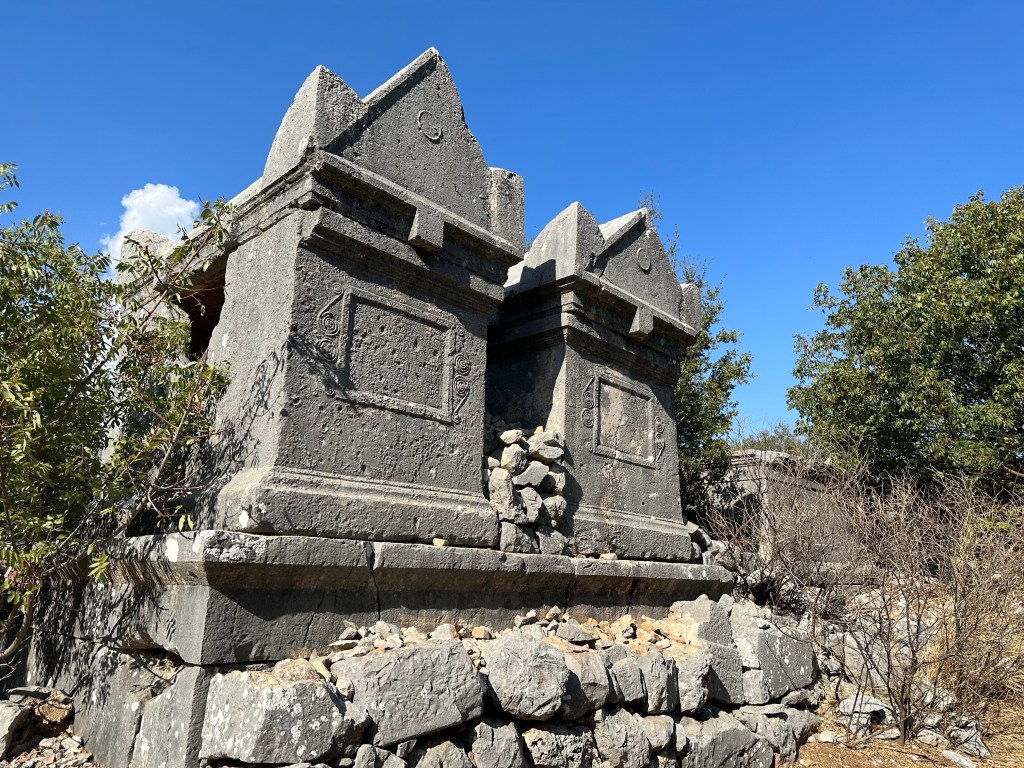


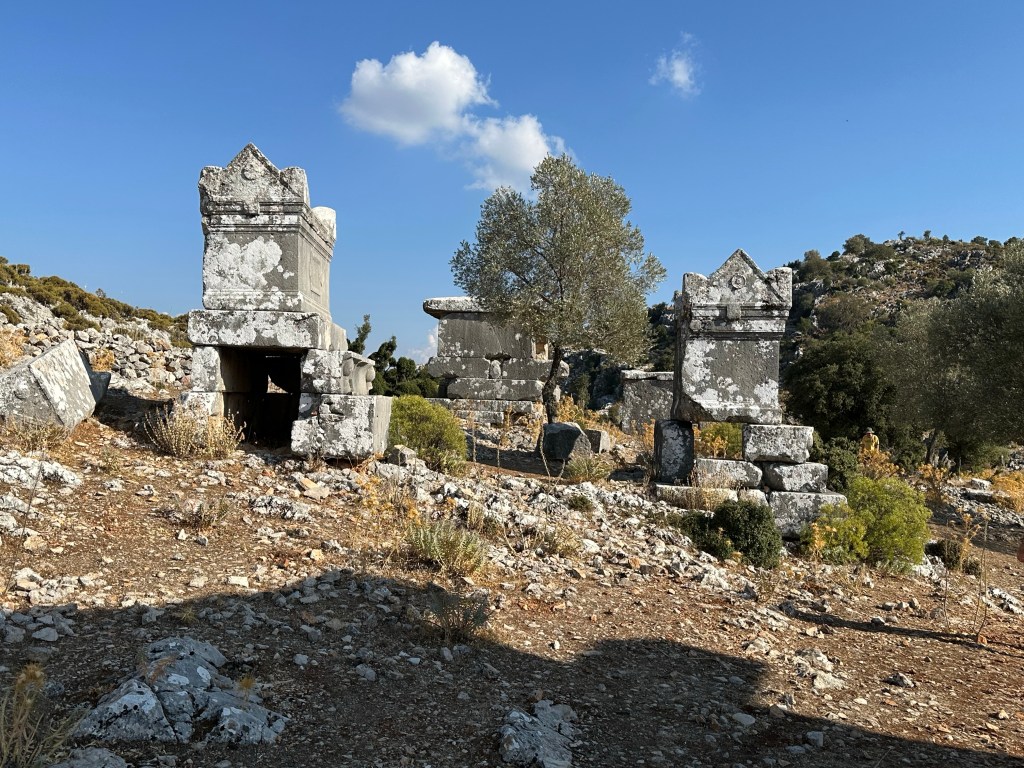

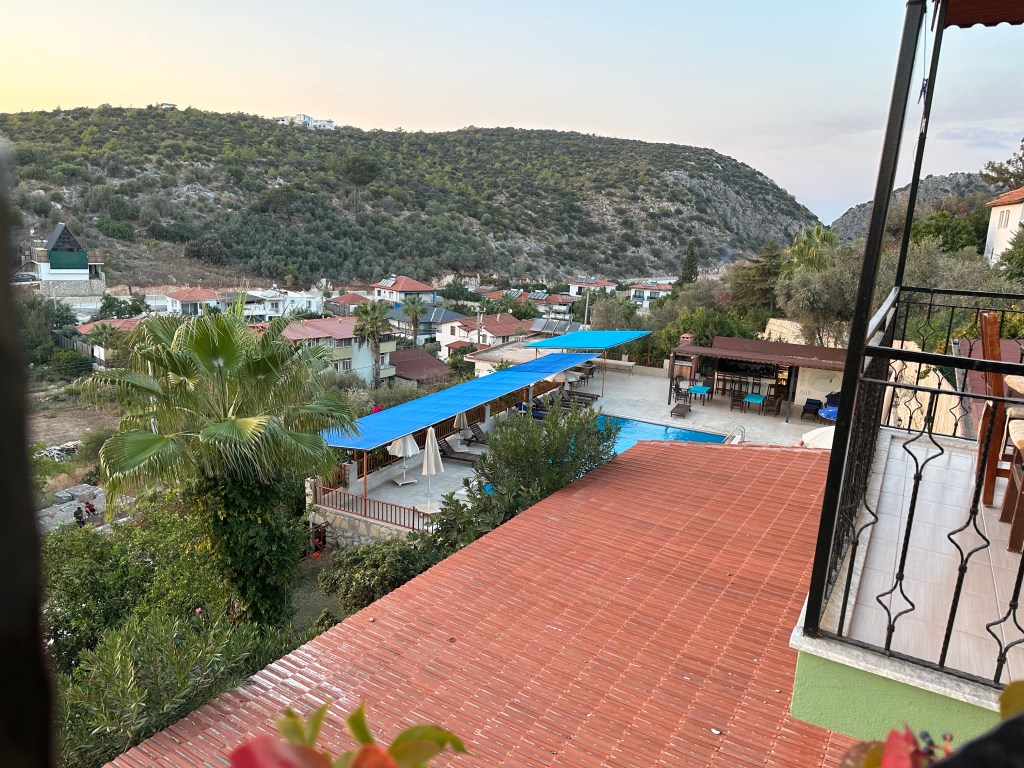
After a very pleasing stroll around several fields we found our way back to the entrance of the modern village and met up with our luggage and a bus before going to the slightly more modern setting of our hotel- as the view from my balcony portrays.
One more thing of note this apparently is where the original St Nicholas was born. The restaurant on the street below our hotel strongly reinforced this theory. As well of course providing excellent food -Calamari and then shrimp stew – excellent!

The cat had been shut in which it didn’t appreciate and spent most of the evening trying to escape from closed windows. Roughly 12 km today, a bit more relaxed now we had done the “long” walk.
 Marion's 50 Walk Challenge