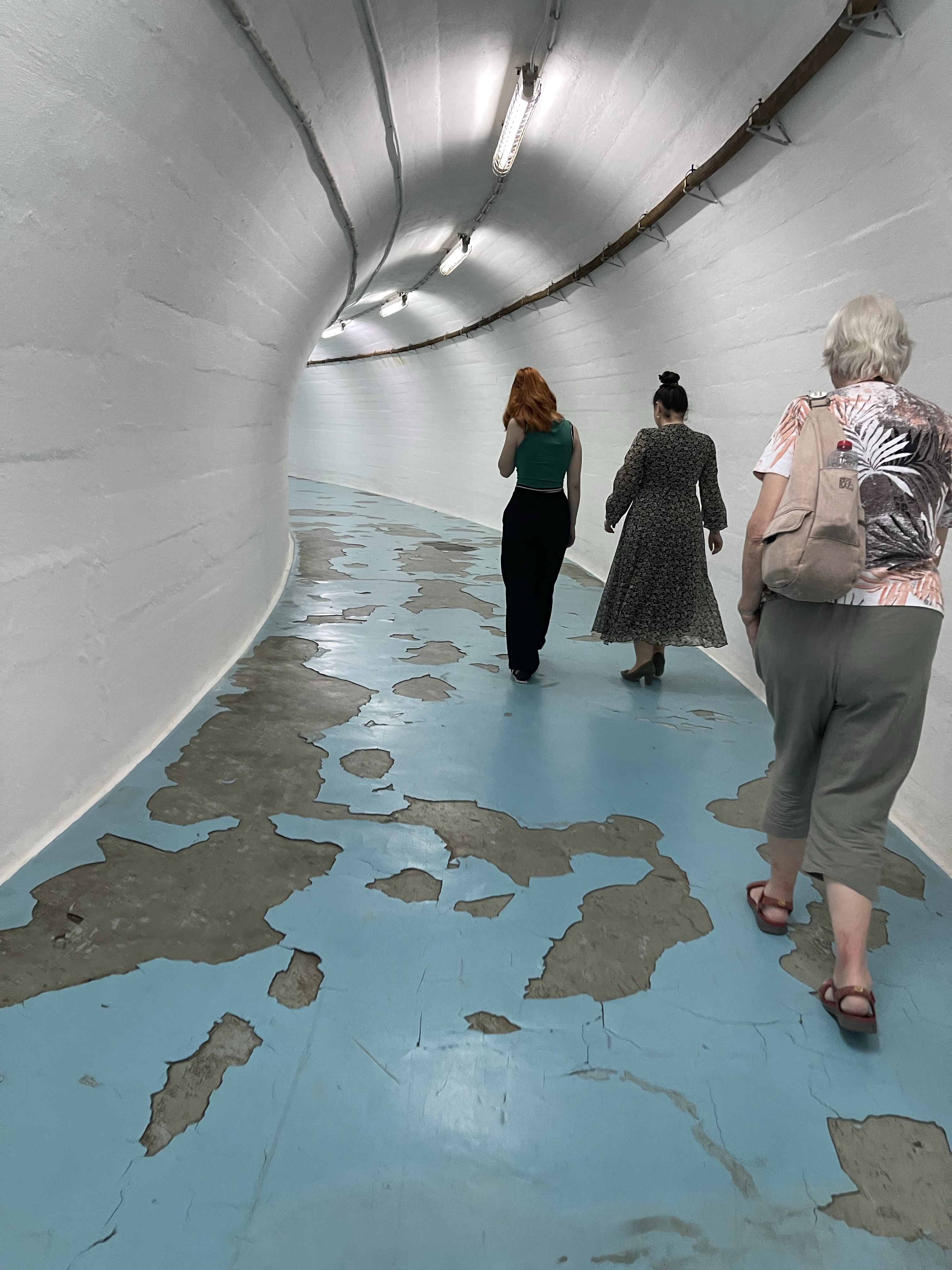
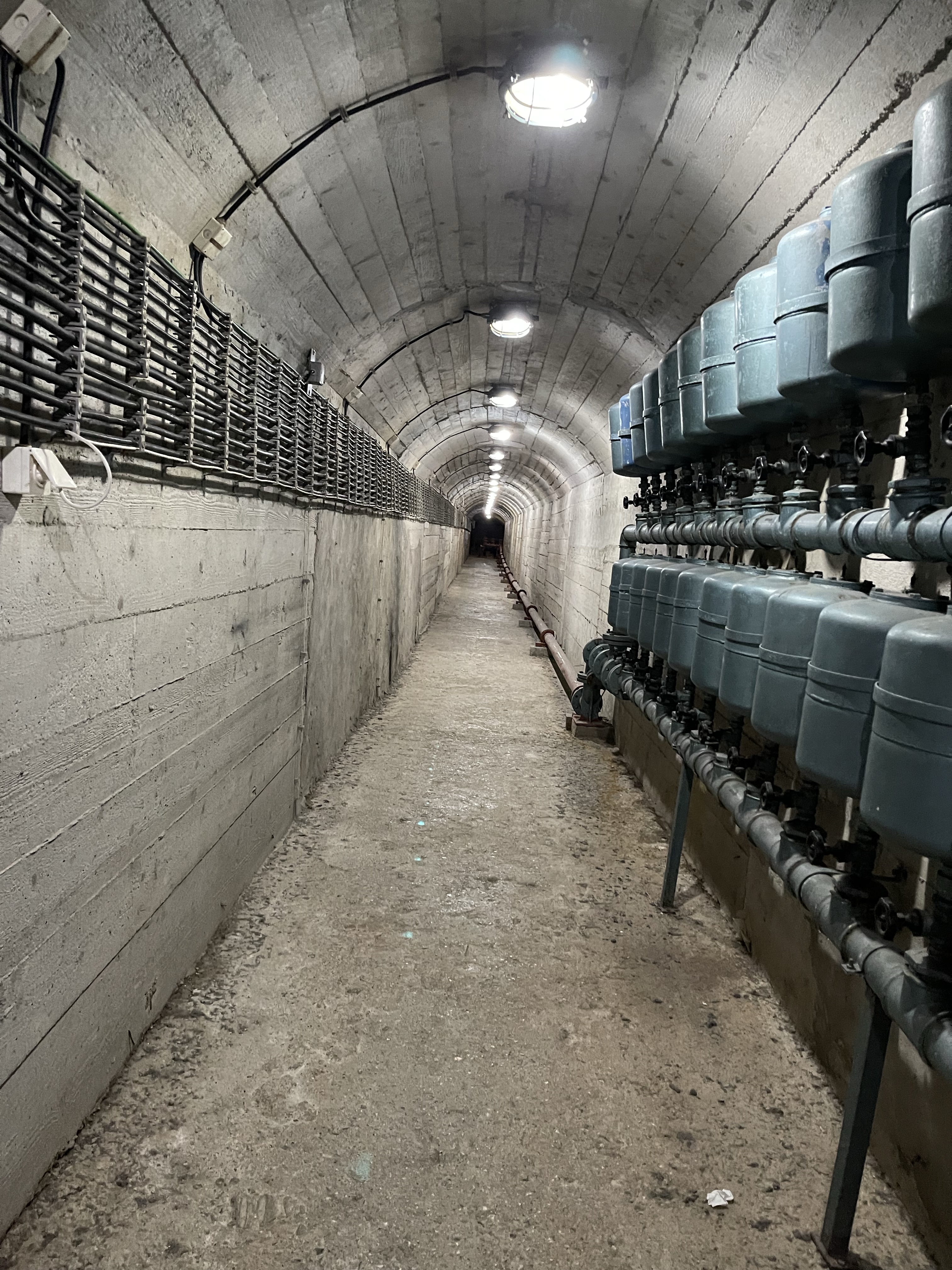
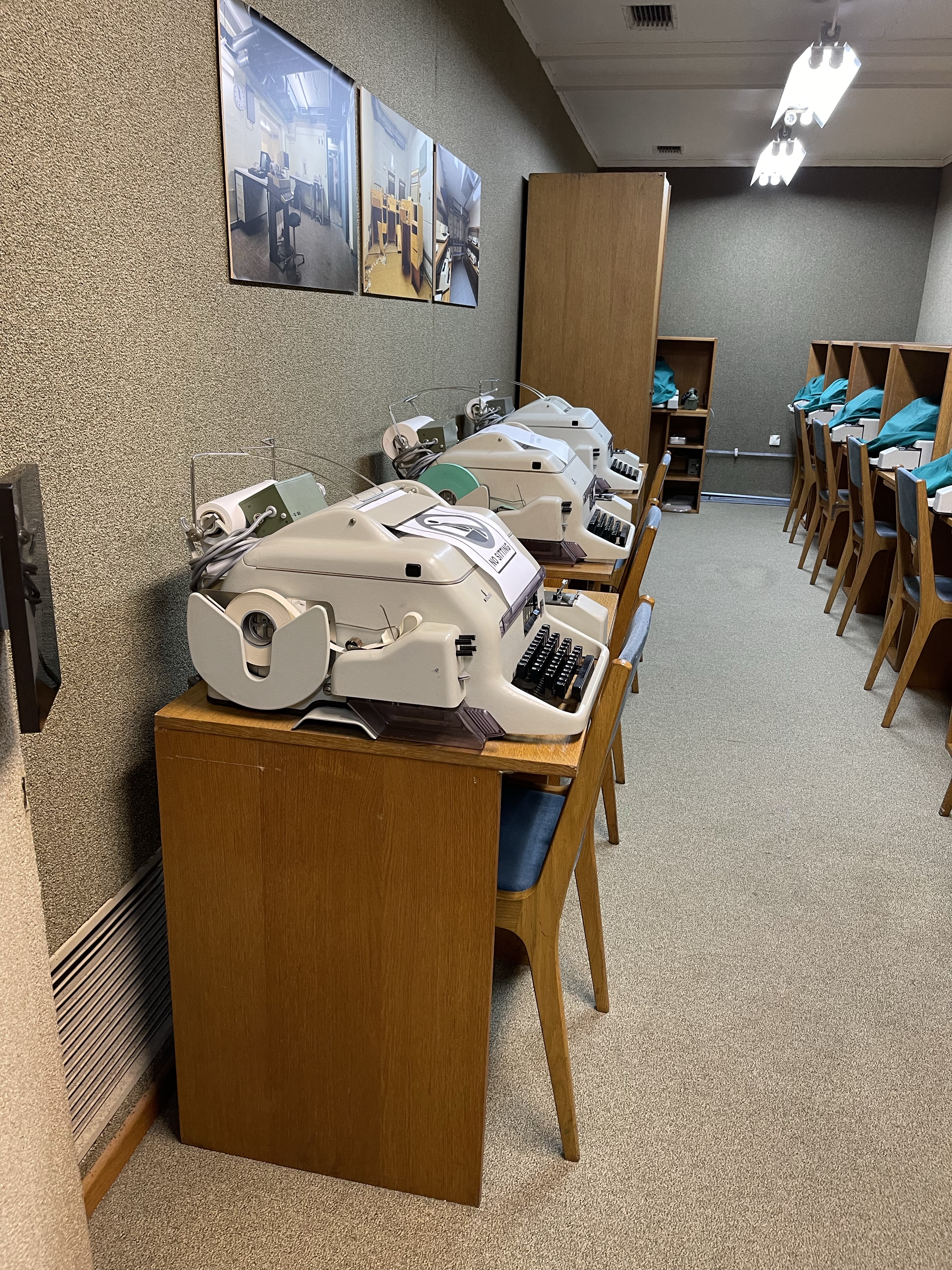
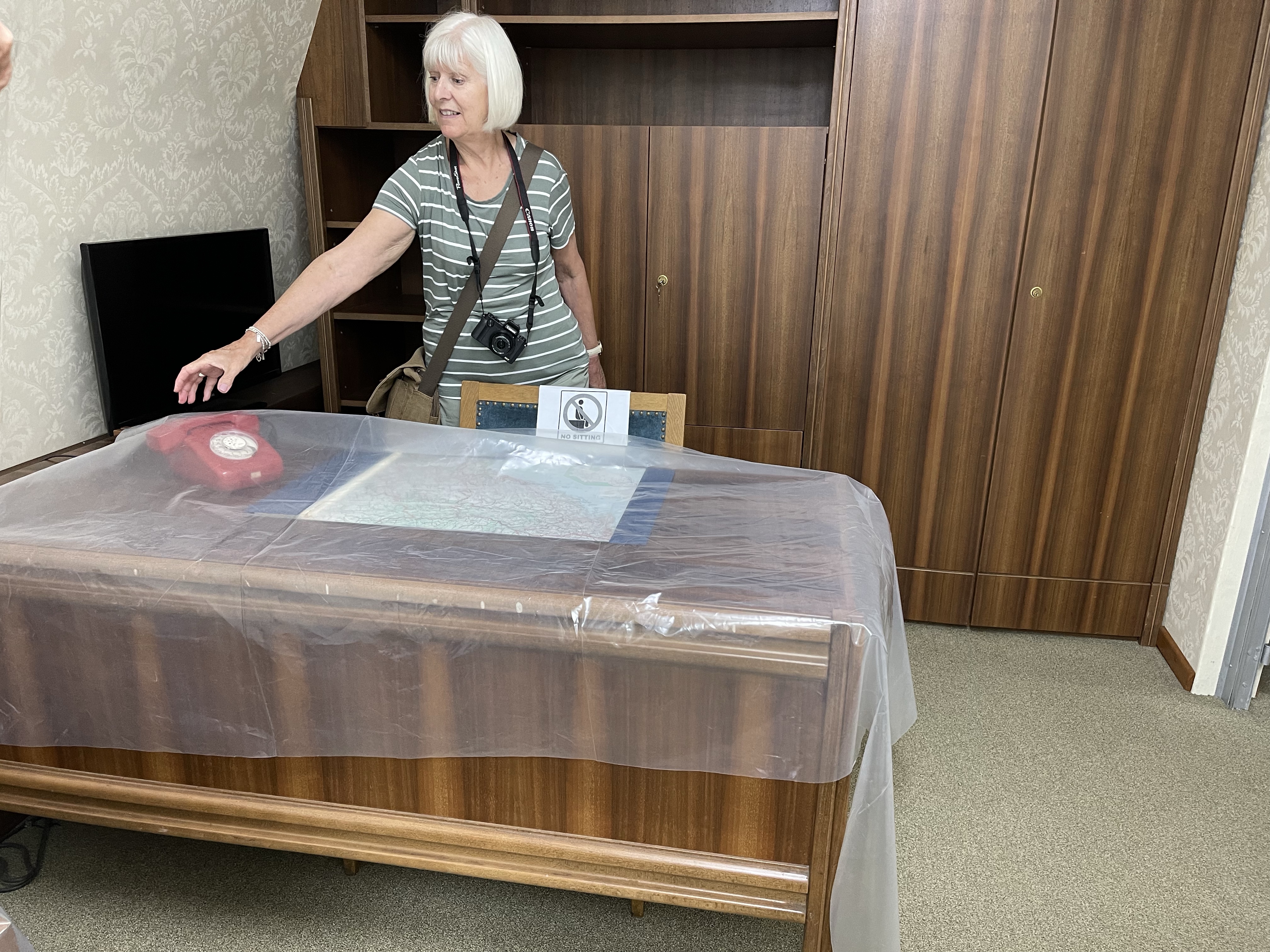
Leaving Sarajevo today we firstly went to Tito’s bunker. This was a secret bunker built in the mountains for President Tito who was leader of the communist regime known as Yugoslavia from after the Second World War until he died suddenly in 1980.
The federation of Yugoslavia was a well organised prosperous group of states. It joined the non- aligned movement which helped develop trade without having to stick with a particular group of countries and it was the most open of all the communist countries as well as having a thriving tourist trade.


On next to Mostar a significant city in the Herzegovina region, set on both banks of the Neretva River. Now a UNESCO World Heritage Site.
Having booked into our hotel – and the first lift – well in my block- of the journey we met our guide for a city tour. Quite a lot of redevelopment still strongly in evidence, as with Sarajevo there was much destruction in the Balkans war of the early 90’s and money for repair and development has taken a long time to access.
This was a city where different religious factions lived harmoniously and mixed marriages were common place. As we set off we can see evidence of Muslims and Orthodox as well as memorials high against the sky line.
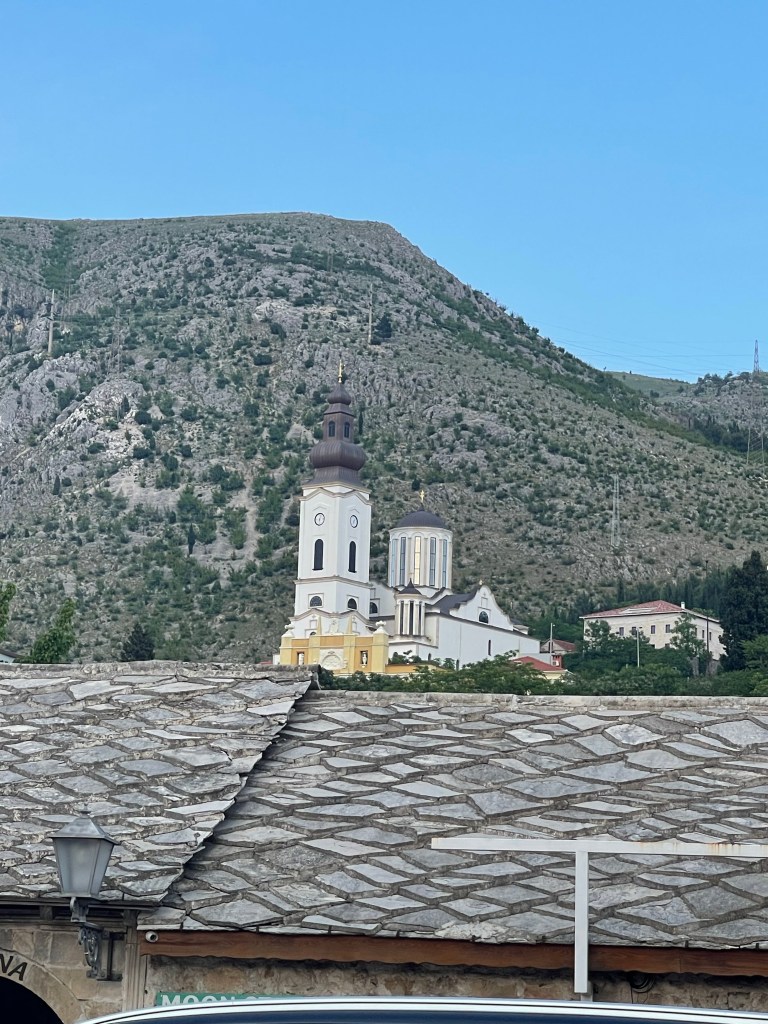


The town was founded by the Turks in the fifteenth century and it was at this time that the iconic bridge – Stari Most was constructed. This site was to become one of significance around the world. First though to sites of an old tannery with it’s own adjacent mosque – the workers realised that the smell of their work probably didn’t mix well with neighbours!
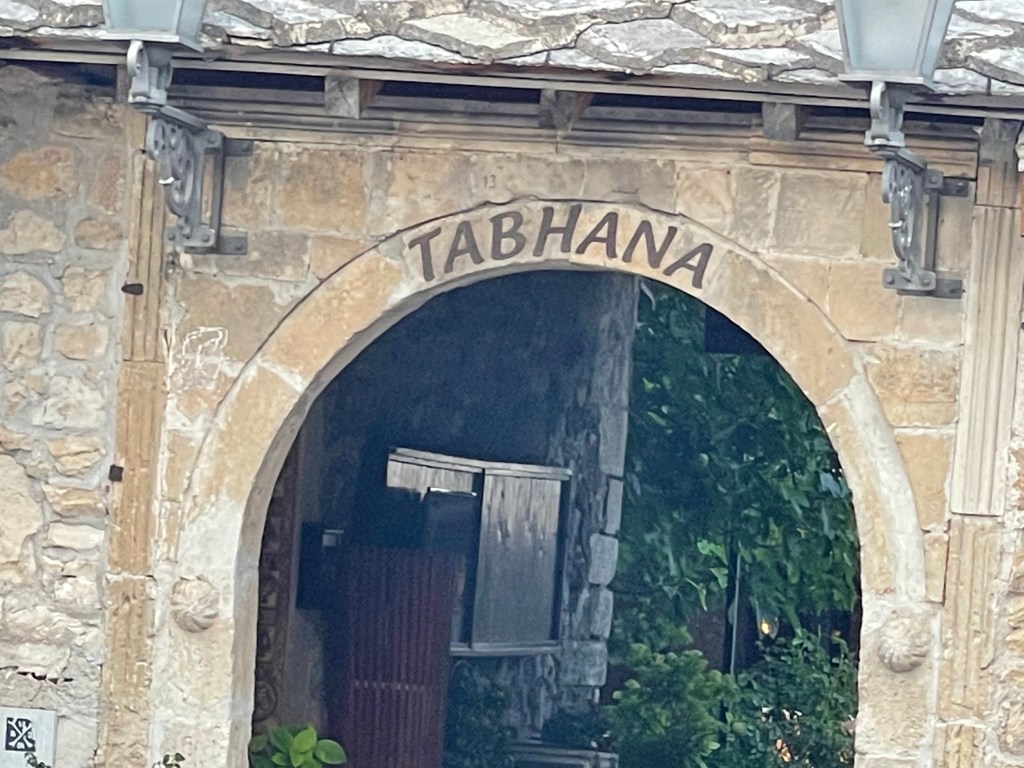

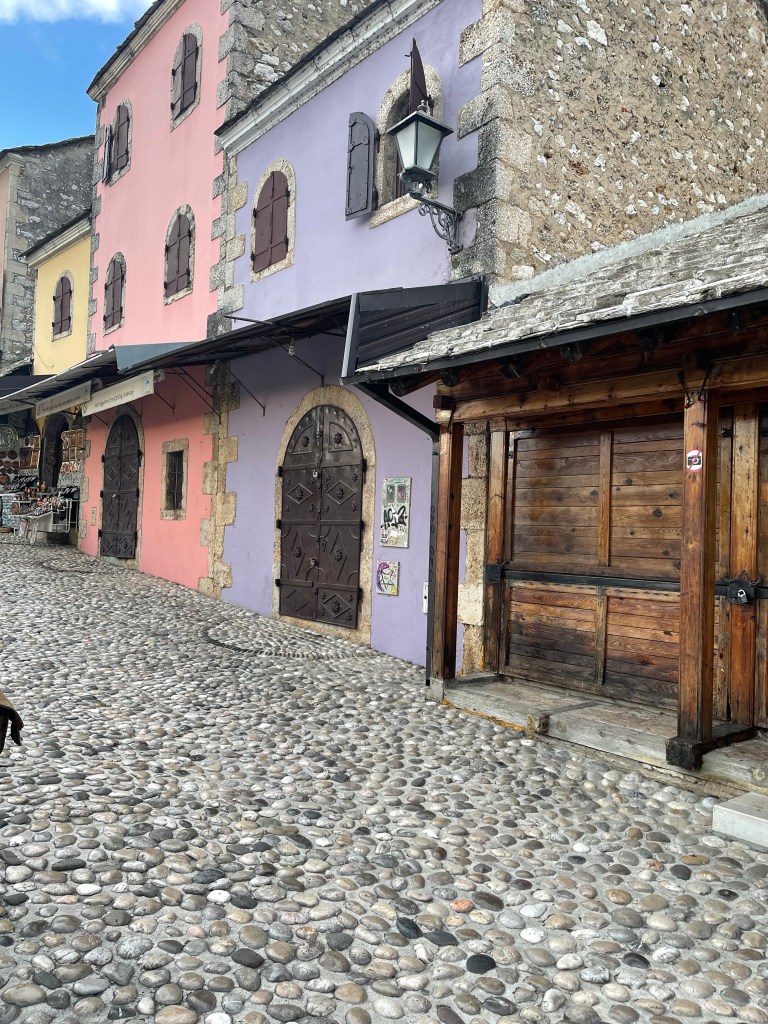
Just before this area we crossed a very definite line which put us into the ‘old city’ – we now had cobbles on the ground and narrower streets with older buildings. This was predominantly the Muslim side of the river with small shops and tradesman. We soon reached the iconic bridge and stopped to hear about the famous annual bridge jumping festival and the jumping club. There are people every year who feel an urge to exercise their bravado and jump from this height into the fast flowing icy water! The walking surface of the bridge is quite unique and we are advised to walk on the raised ridges – it wasn’t designed for somebody with my length legs!
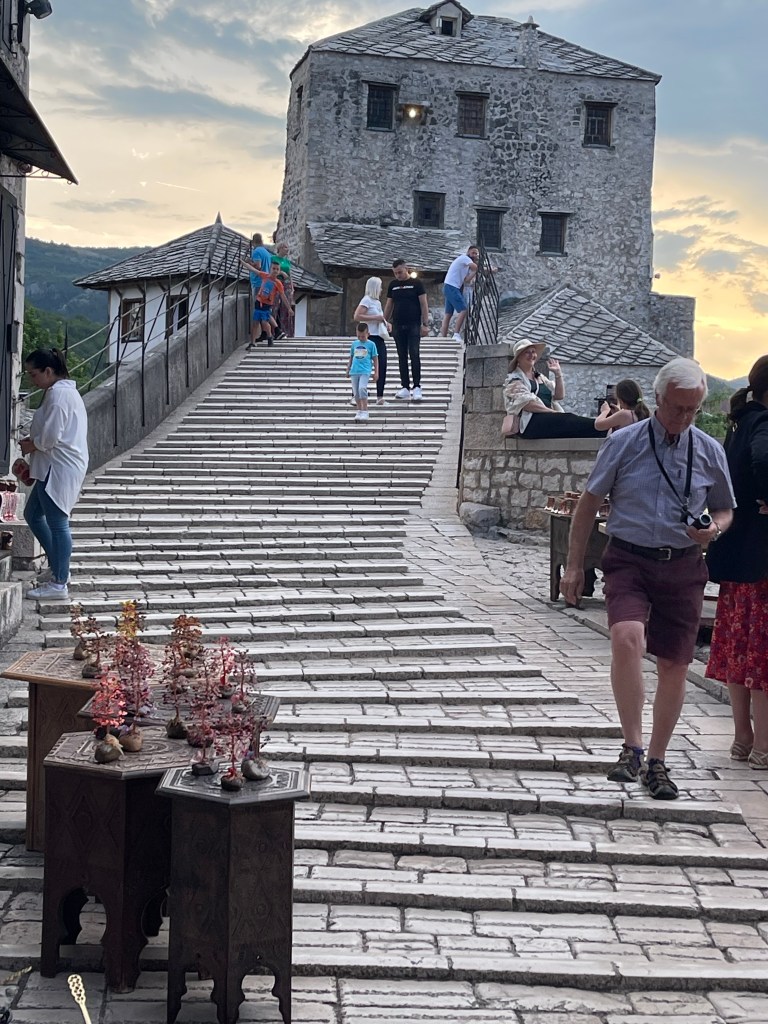
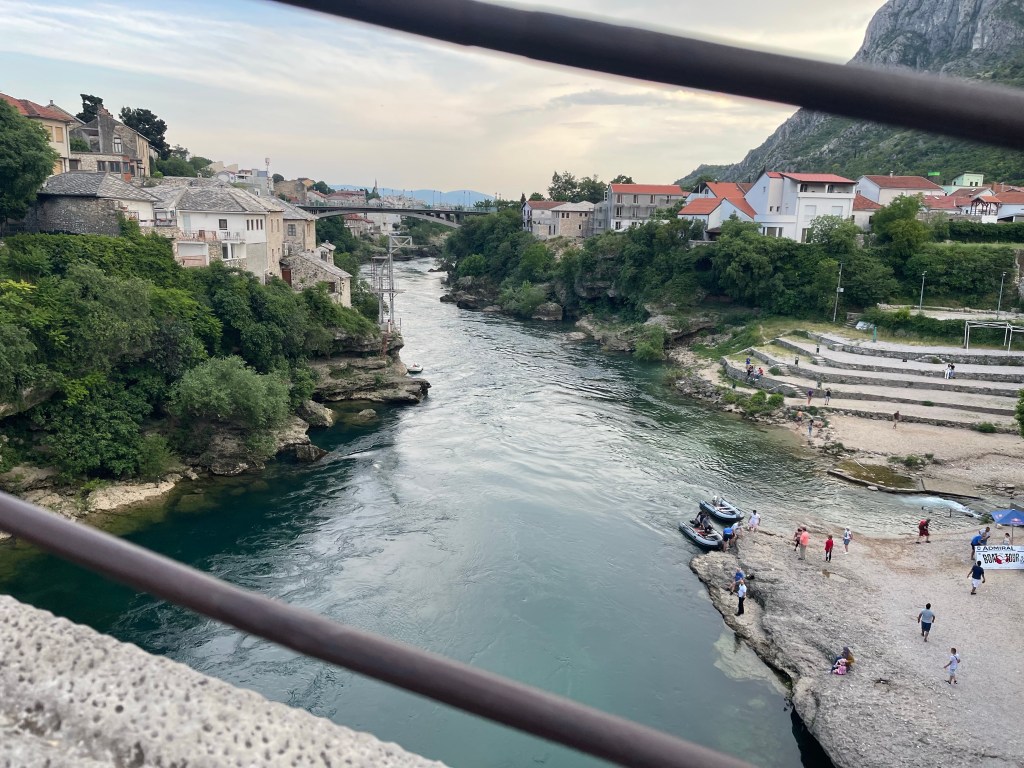
After the city had been besieged for several years during the Balkans War 1992-95, attention was turned towards the wider world – Jeremy Bowen was filmed running across the bridge not long before this wonderful piece of architecture, completed in 1566,was shelled so that it collapsed. It was at that point rather ironically that the rest of the world began to take more note as to what was happening.
Extensive rebuilding has happened in this much visited part of the city and international aid in the form of funding has been forthcoming but as we were to see as we explored further there is still much that was lost. Will it be rebuilt or do the shells of once grand houses and apartments now form part of the history.
Having crossed the bridge there are more shops and splendid doorways and access to restaurants overlooking the river and the bridge.



The bridge has major semicircular buildings at each end. Used once for storage, trading, confinement and now a museum. Having finished the official tour Jackie and myself continued further back out of the old city and into the area which would have been developed by the Hapsburg during occupation by the Austro Hungarian empire
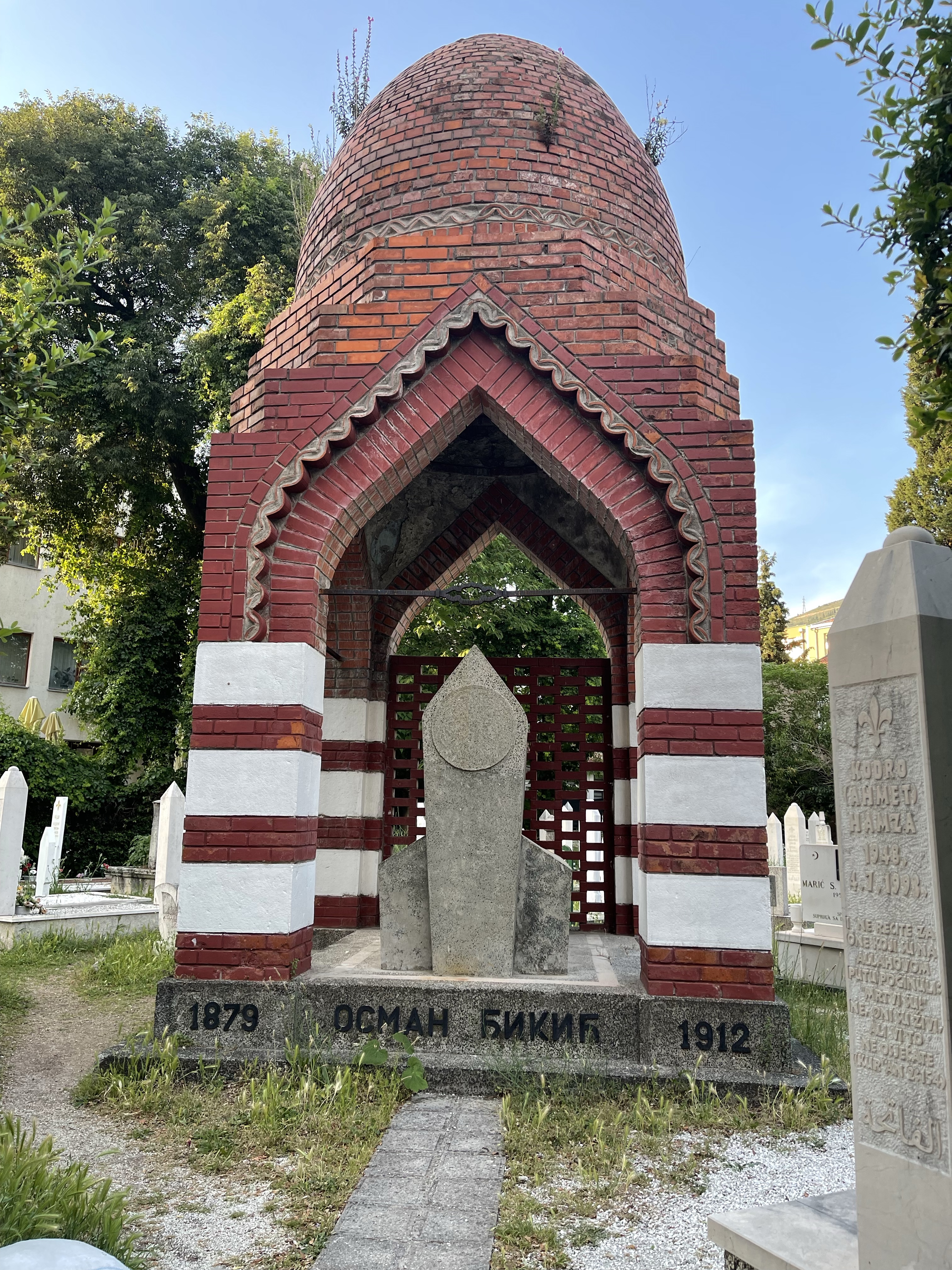
Two things stood out in this area, the bombed out large buildings and the small Muslim cemetery, with many gravestones with an end date in 1993. I perhaps should have known that in Muslim cemeteries there are stones placed at each end of the grave, this would help explain the intensity of the stones that we saw in Sarajevo .



We walked back towards the bridge in order to call in at a small exhibition about the war and what had happened in the area – the video footage about the bridge was quite dramatic. We then got a history lesson from a survivor who was 11 when his house had been destroyed and who then spent the next few years doing all he could to support those fighting for their city. Not quite what we had planned but very informative! Eating was now needed and rather curtailed our exploration. It turned out that we were able to stay an extra hour in the morning so we were able to explore a little more.
The shape of the bridge is quite amazing and very pleasing – no steel or other supports , even when rebuilt and relies on the correct placing of the key stone.

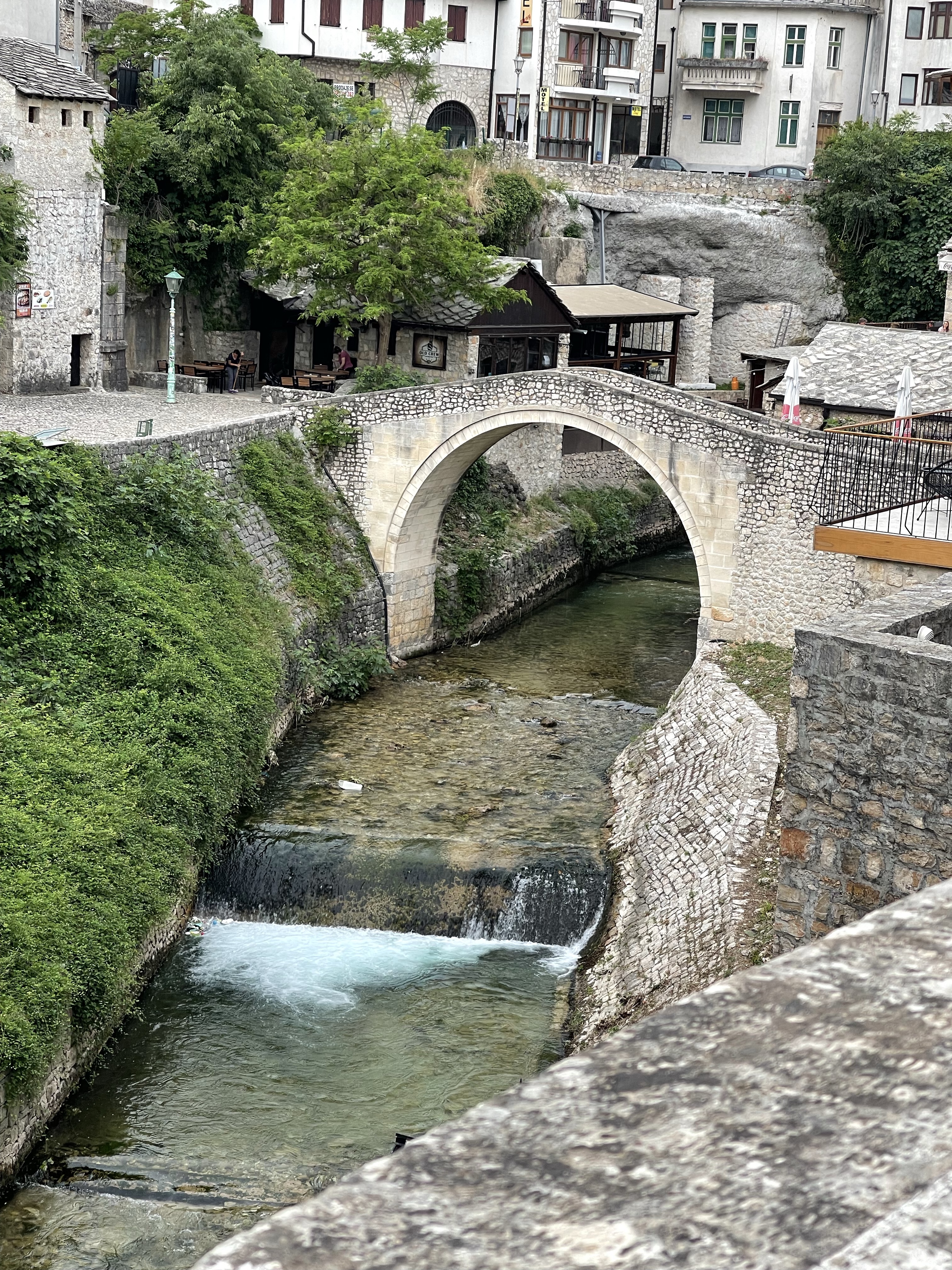
In the morning we were able to visit the art area, another bridge over a tributary of the river and try to capture one last view of this special place. The Turkish occupiers certainly knew how to build beautifully shaped bridges.


Not the longest of walking days but rather special!
 Marion's 50 Walk Challenge