We started our day by driving up into the mountains and on to a large plateau area which has been planted in order to change the diversity – Eucalyptus had rather taken over. We arrive at Rabacal and note that this is a popular starting point- no coach groups yet!
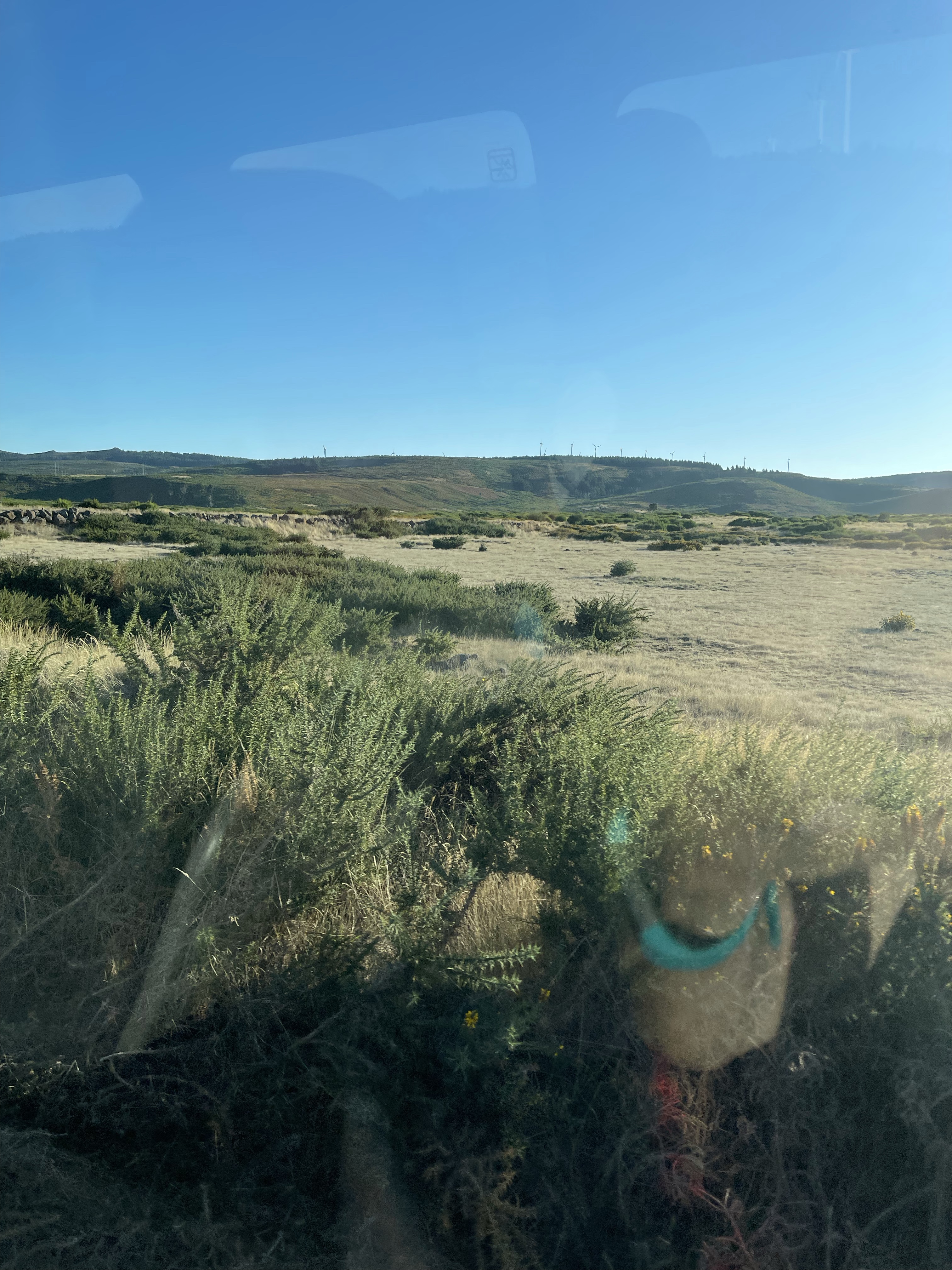
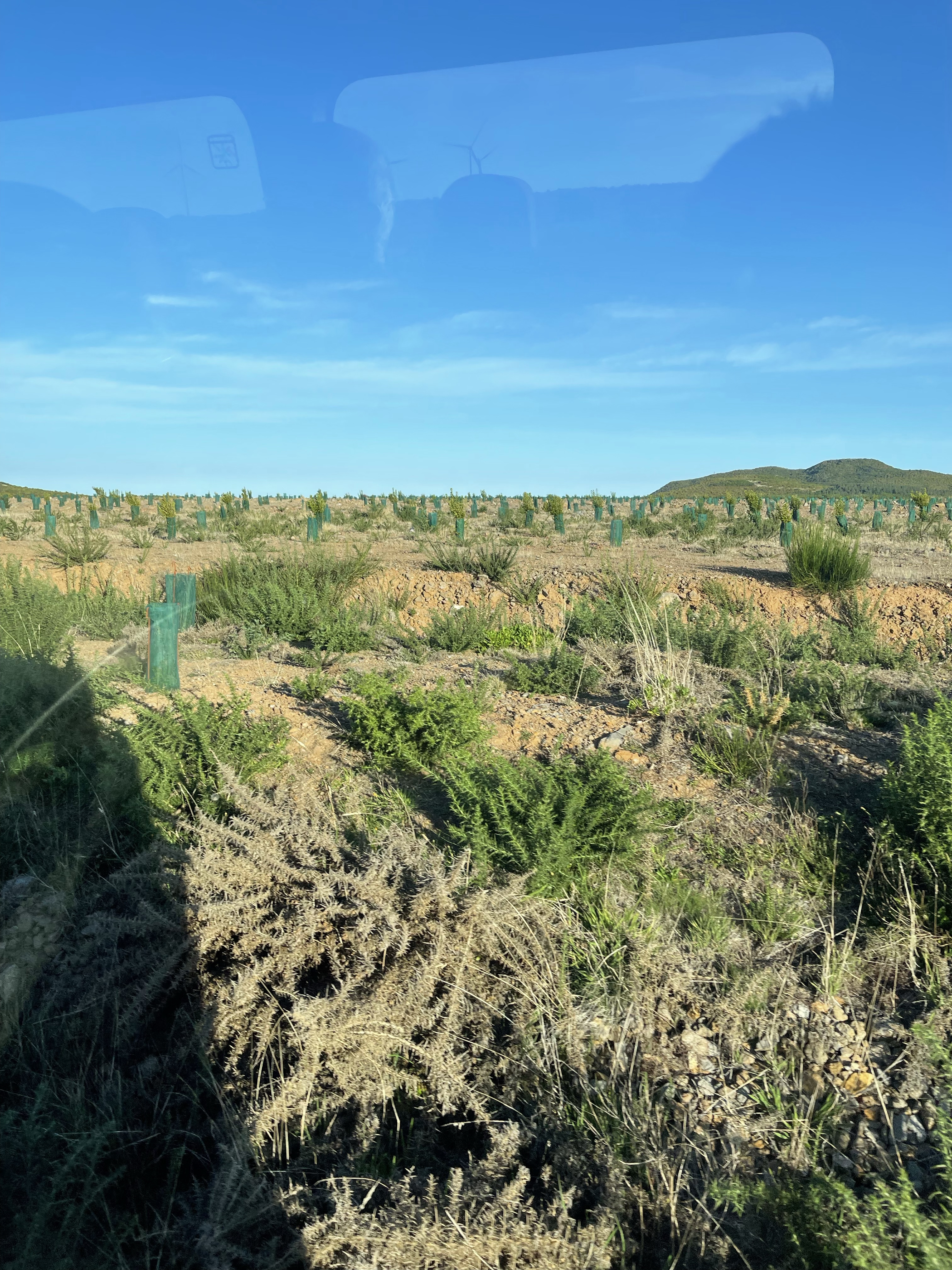
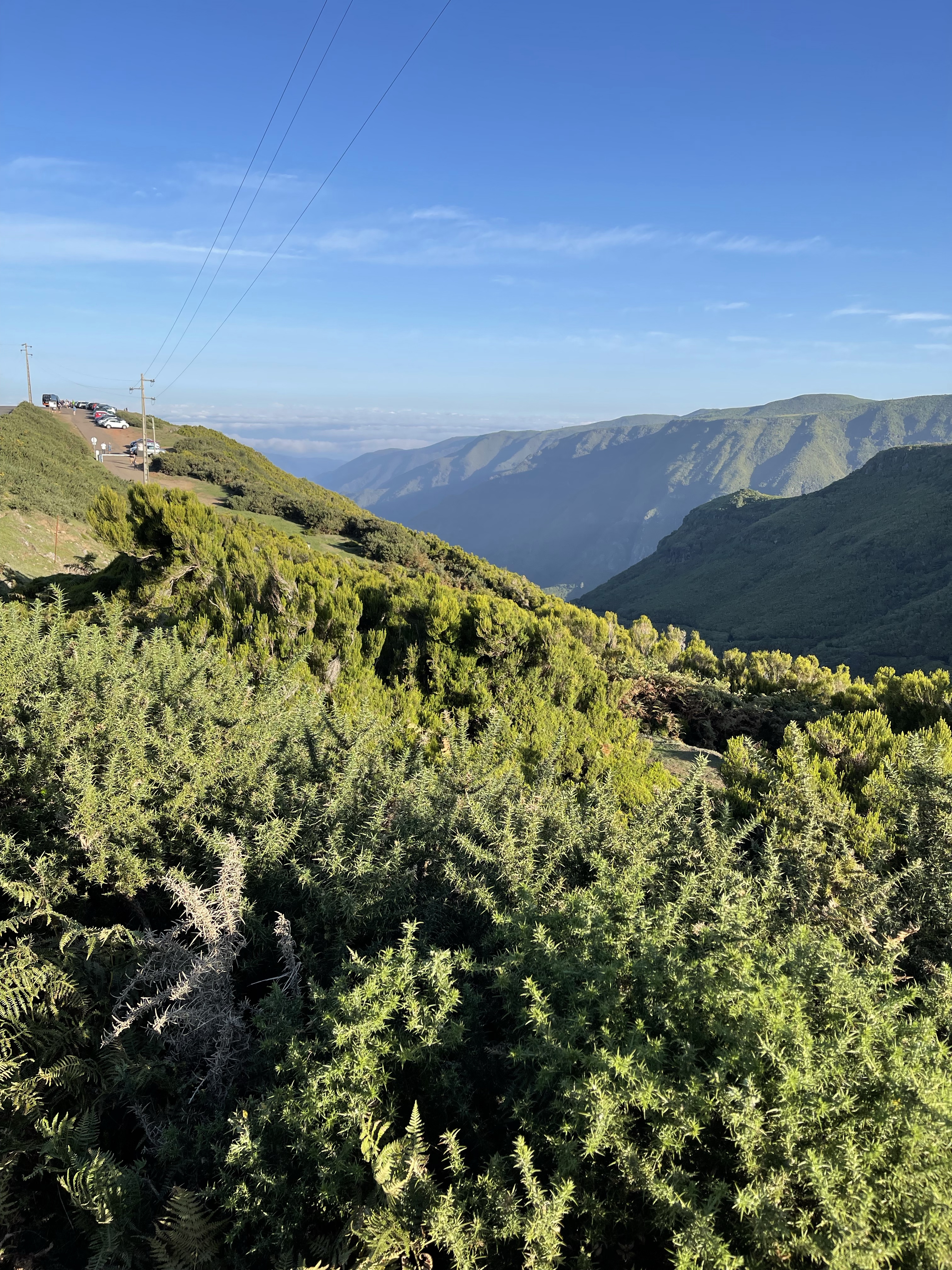
We luckily take a discrete more minor path alongside the Levada do Alecrim ( Rosemary). This turns out to be a little badly named as tree Heather predominates and the Rosemary is much more like a wild thyme! It is already quite warm and there is some welcome shade at the start of our route.
The huge Heather trees form arches in some parts and it is almost as if walking through a tunnel. Again this is one of the older Levadas and it has a very pleasant feel about it .

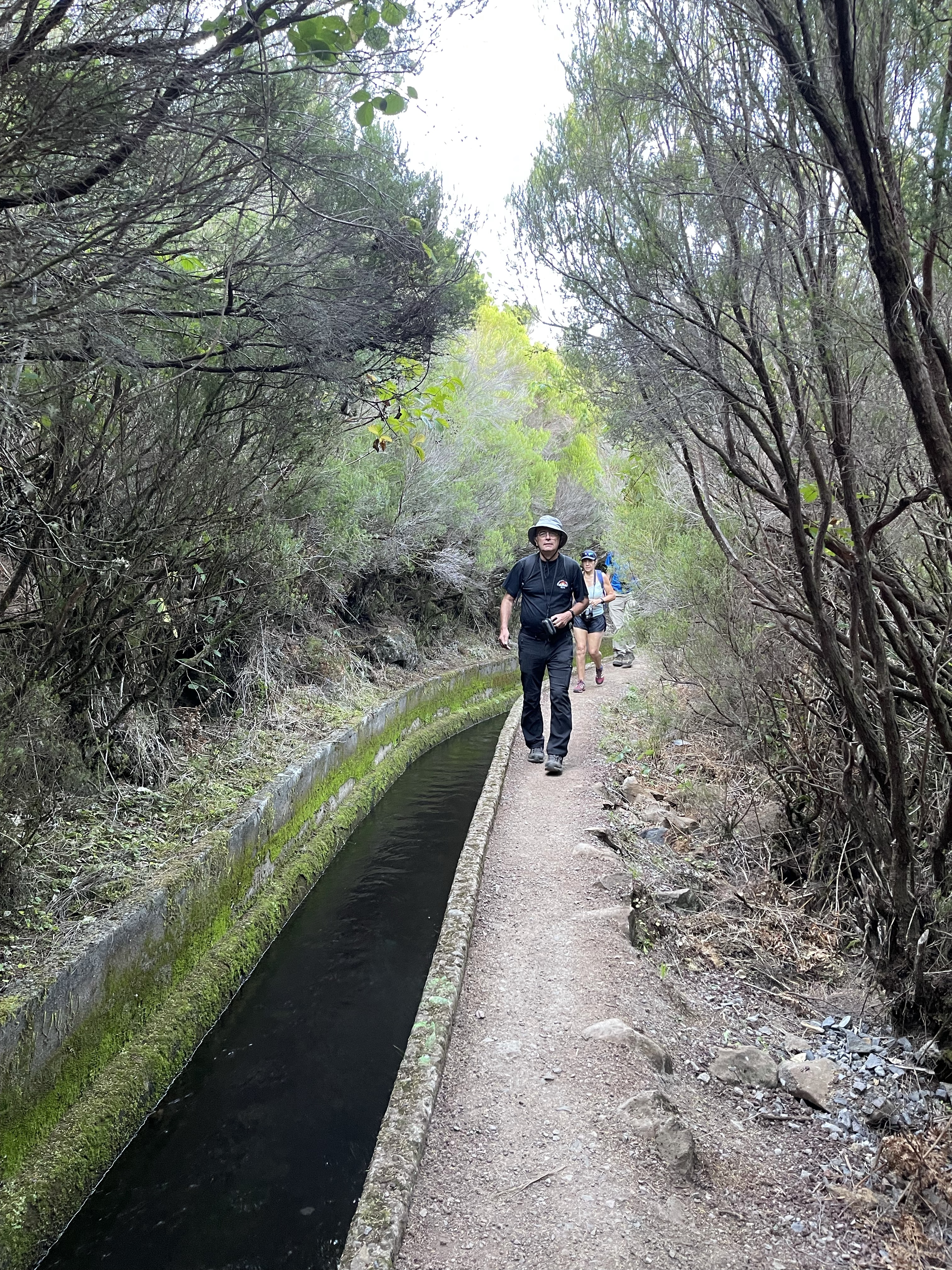
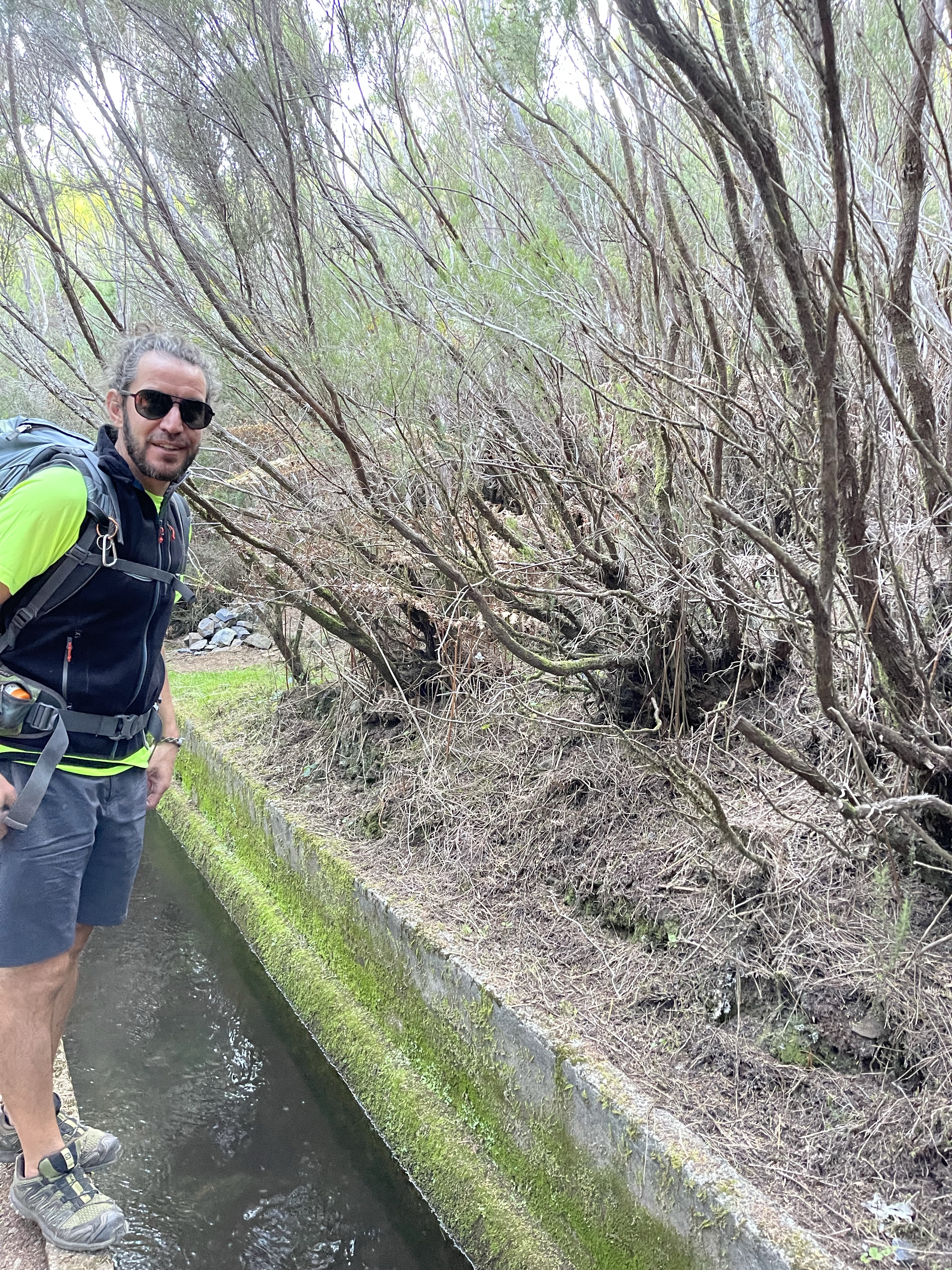
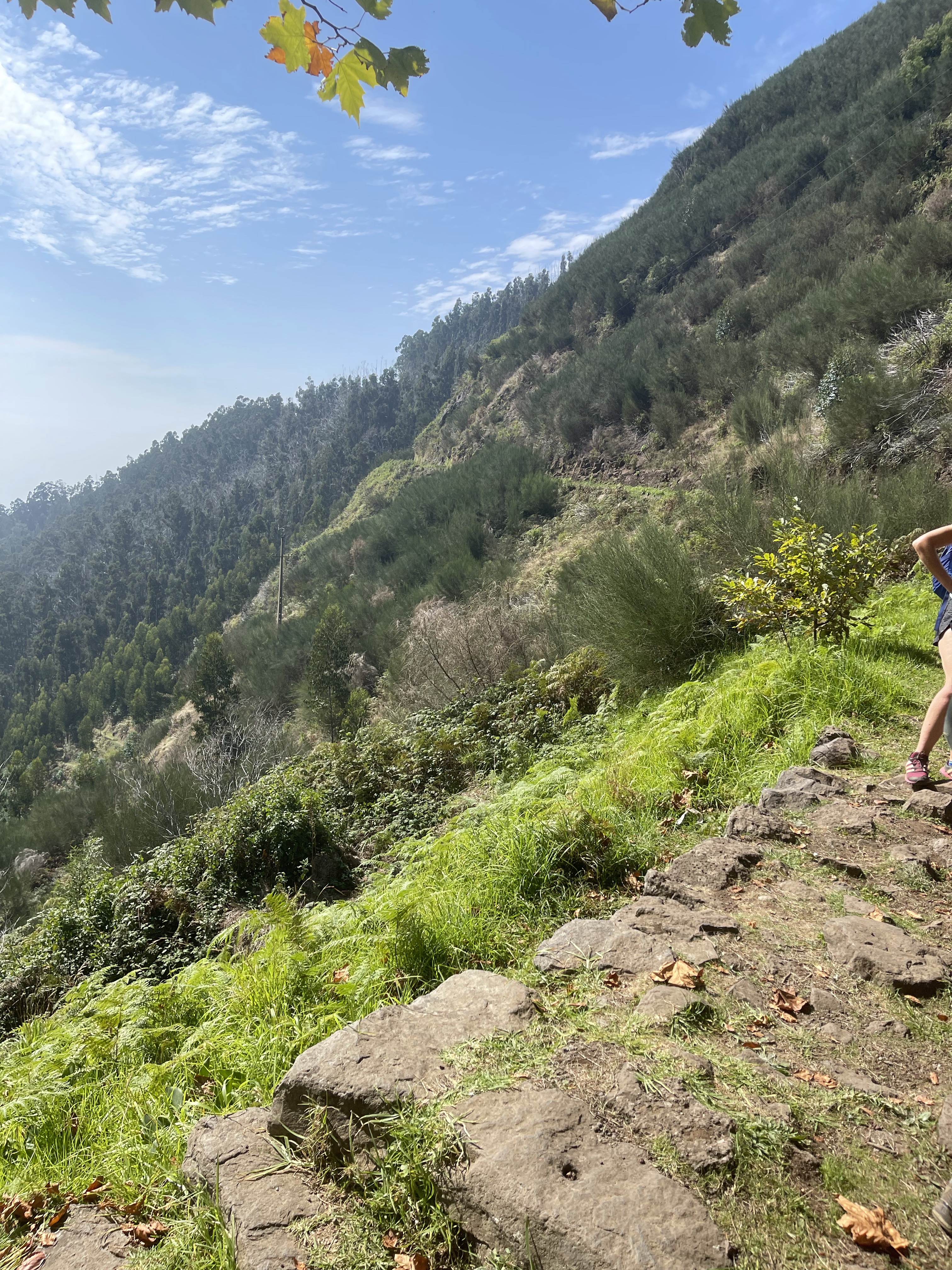
As with many of these walks there are drops to the side and useful fences to give some protection, even if it is psychological.

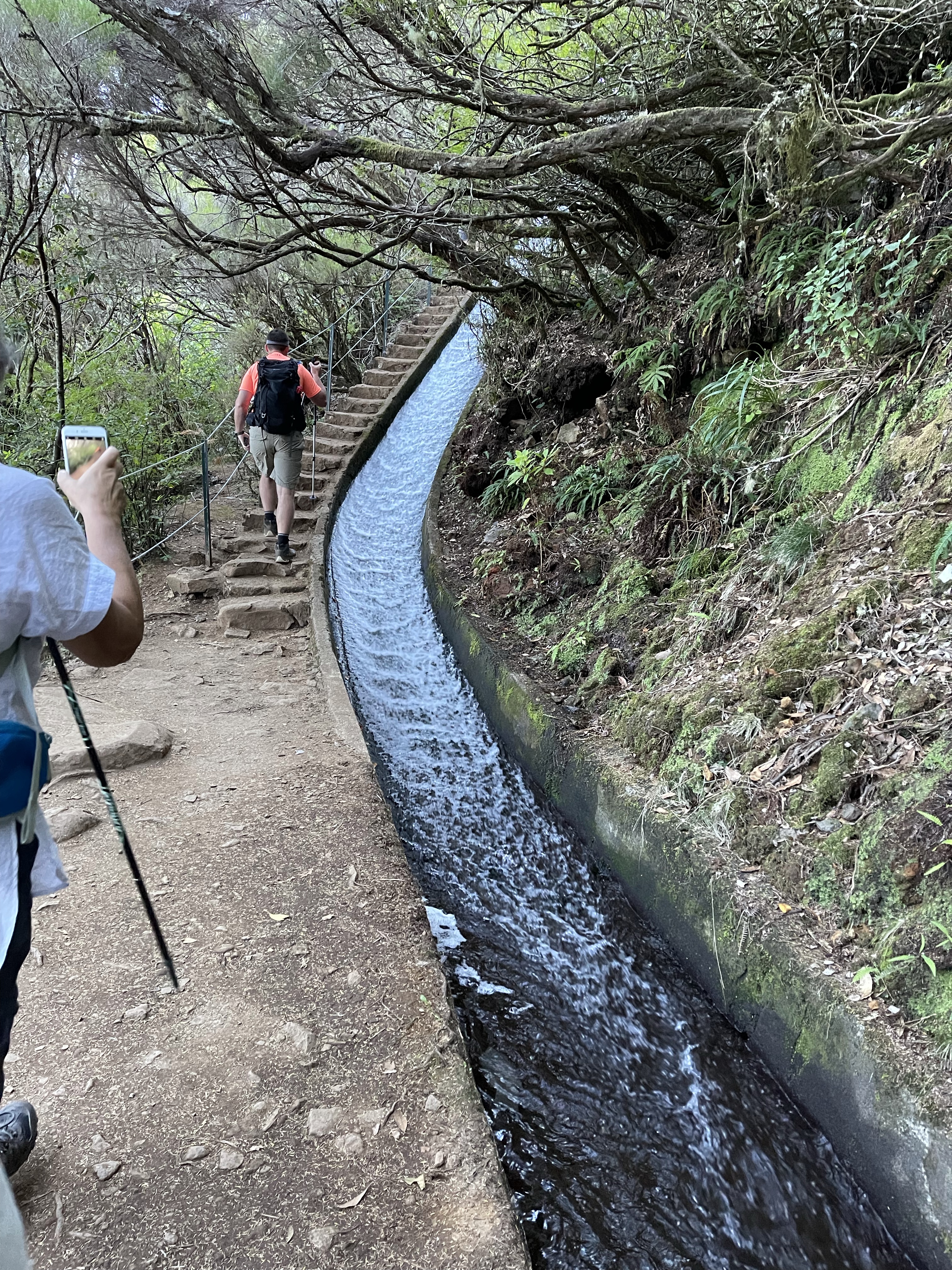

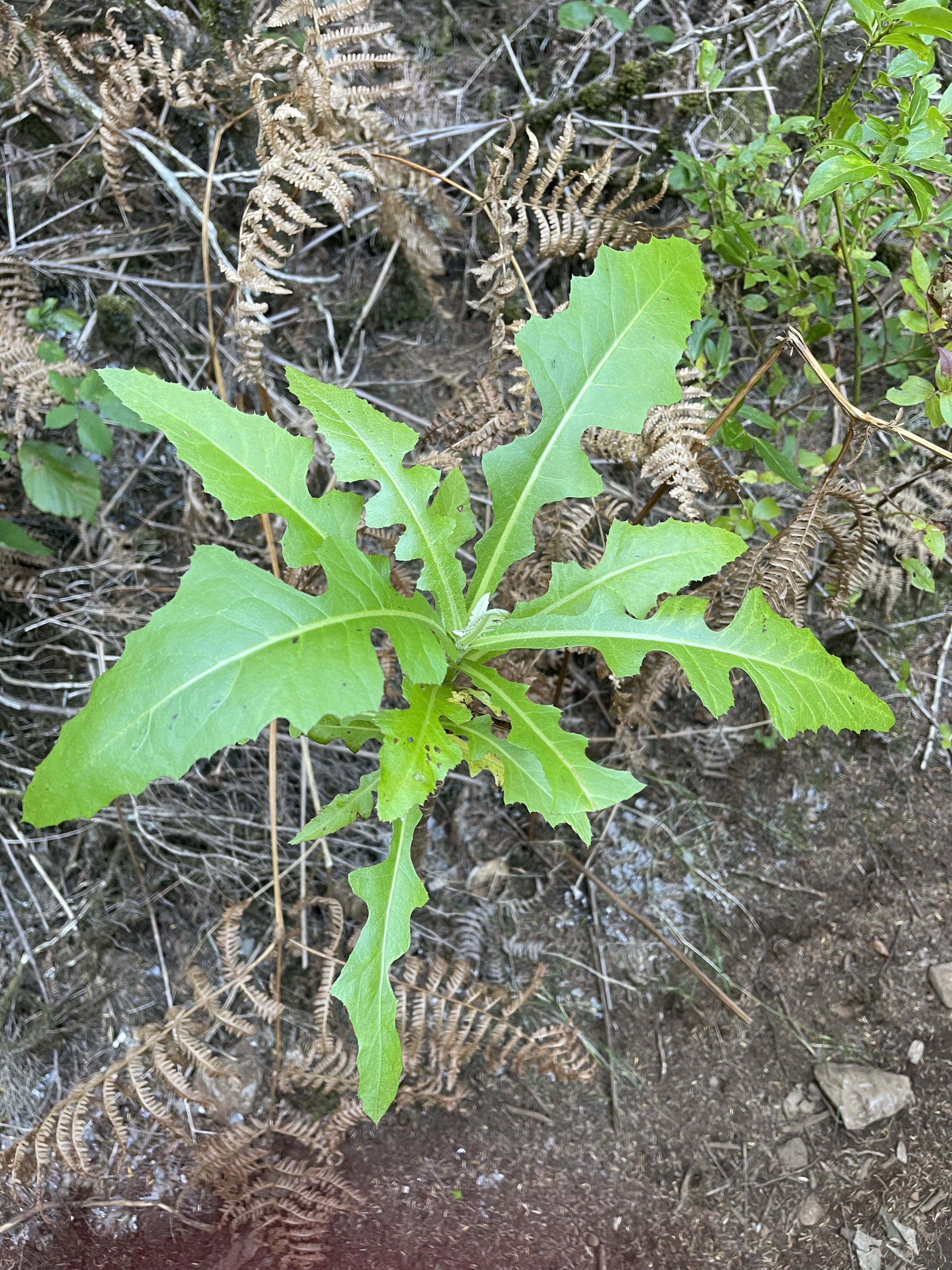
Our route is interesting in the fact that we are able to spot new plants – a giant looking dandelion leafed species! Our path continues until we reach the Lagao do Vento, a river basin formed by water which falls from the top of the cliff. The same two members of the group swam again! We used this as our coffee stop, our guide providing two flasks of hot water and different biscuits or cake each day!

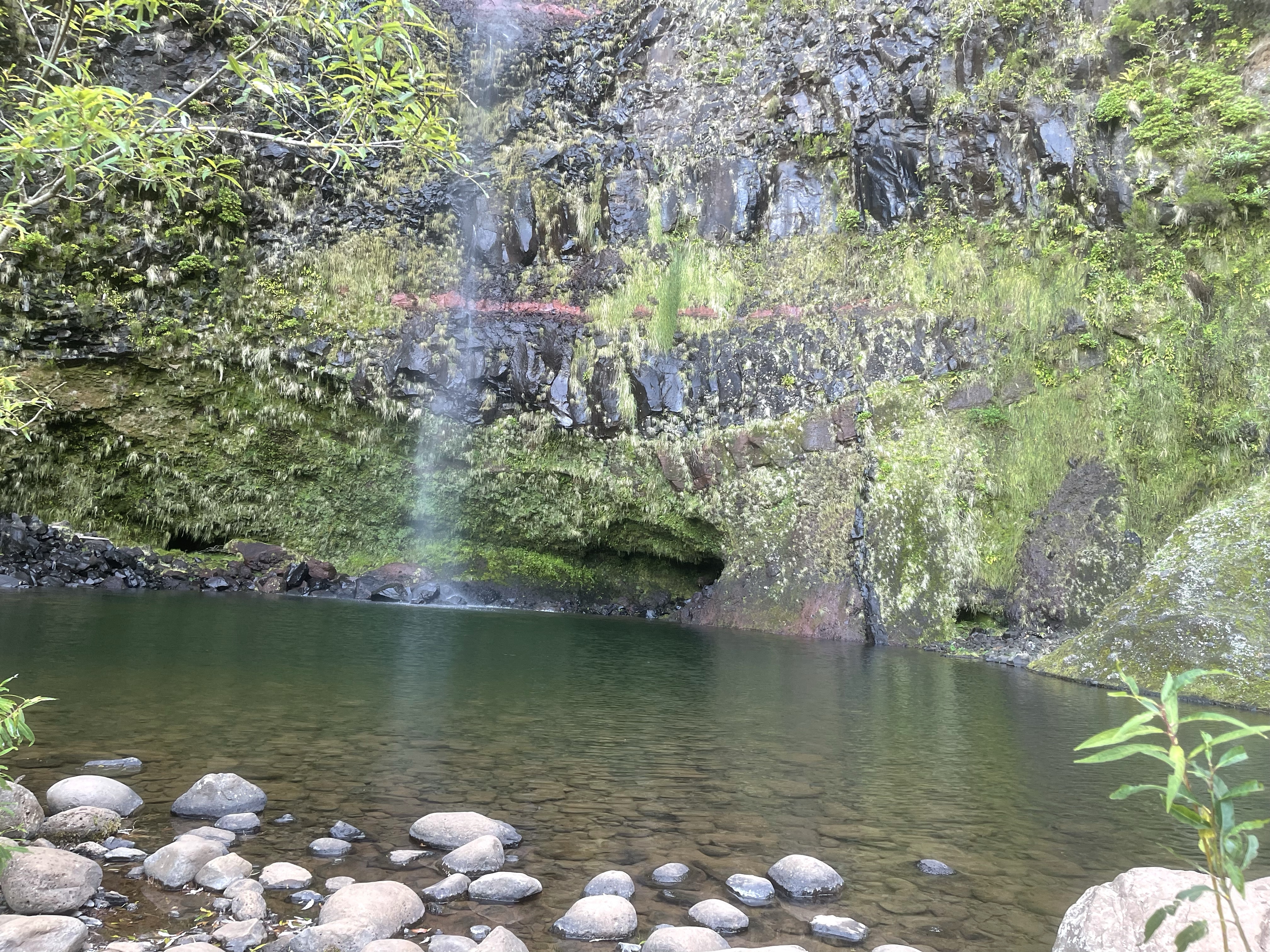
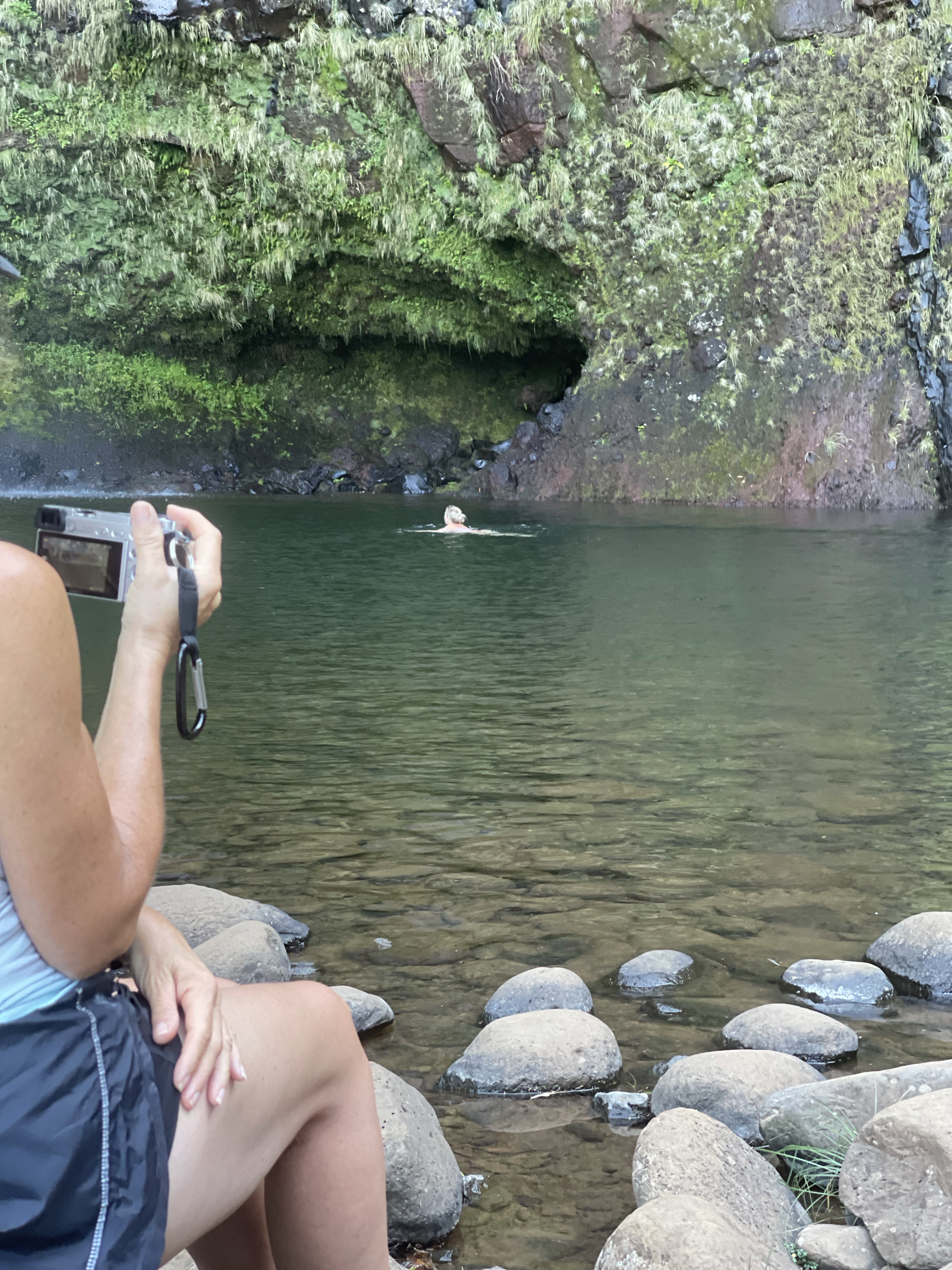
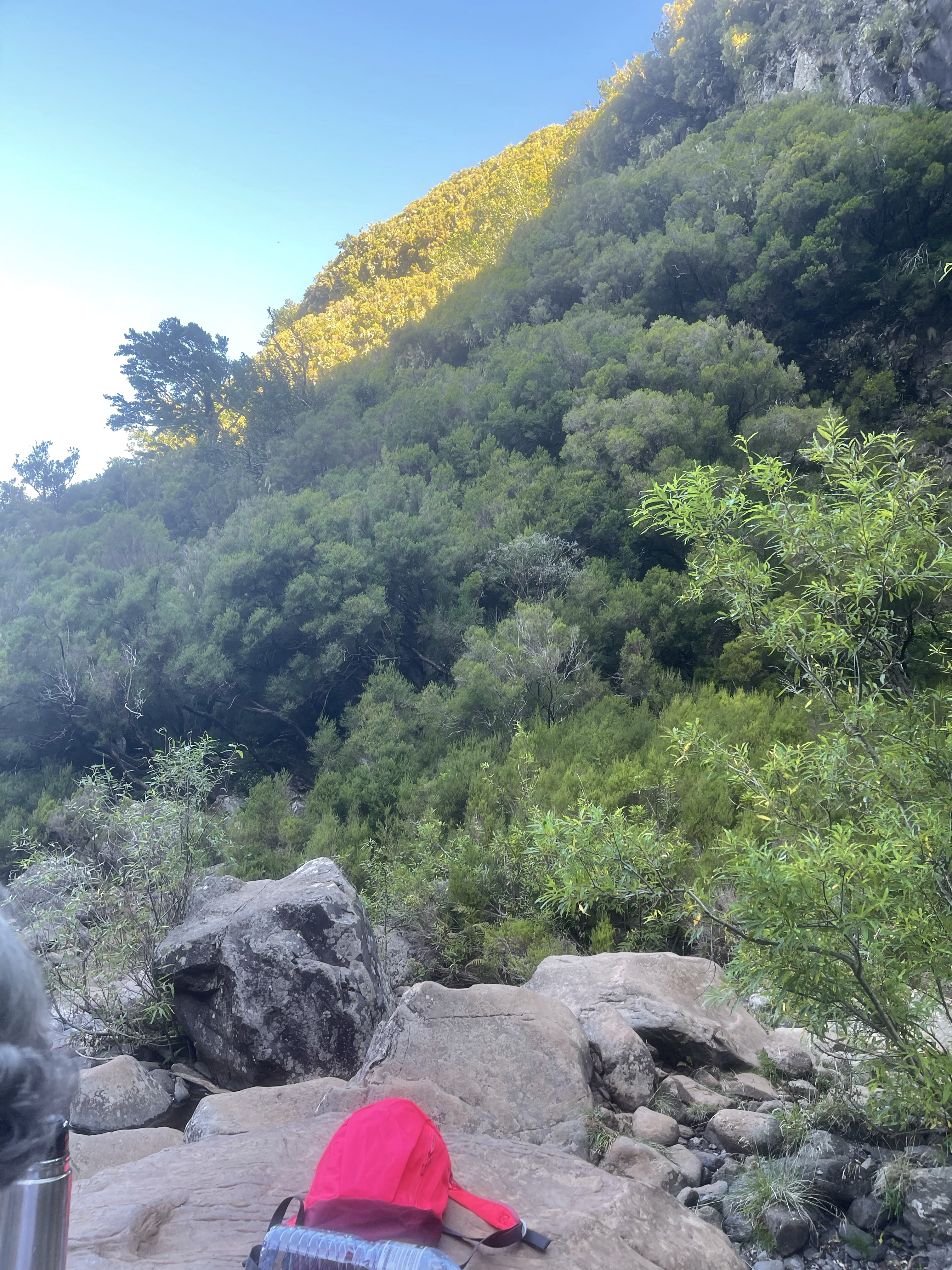
The rock strata is magnificent in this area, so sculptural and various colours.
Our path continued along the same Levada with constant shouts of mind your head – this is an extremely hard wood and the branches stretched out to find the light. About an hour after our visit to the lake we stopped for lunch in a well hidden picnic spot which actually had benches and tables but was close to the main track. We are in the midst of the Laurel forest.

A slight change of direction after lunch and a rather more populated area – we are now following the Levada do Risco and we are off in search of the waterfall which provides the feed for this Levada.
There are many different types of ferns on the island and many of the Levadas also have wet ‘walls’ above them. Moisture from clouds runs into these water courses. After a gentle start the path leads steeply down to our view point.
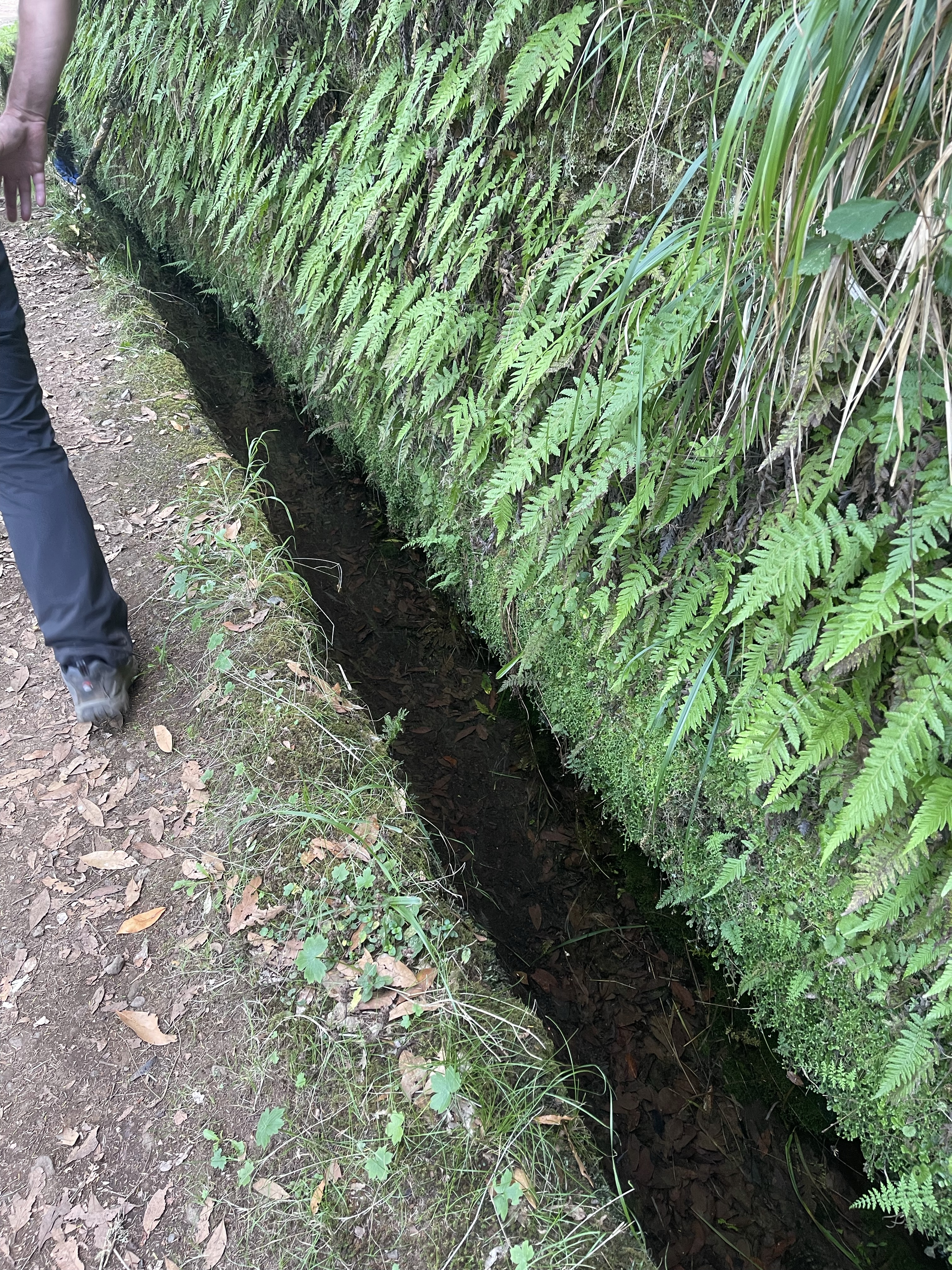
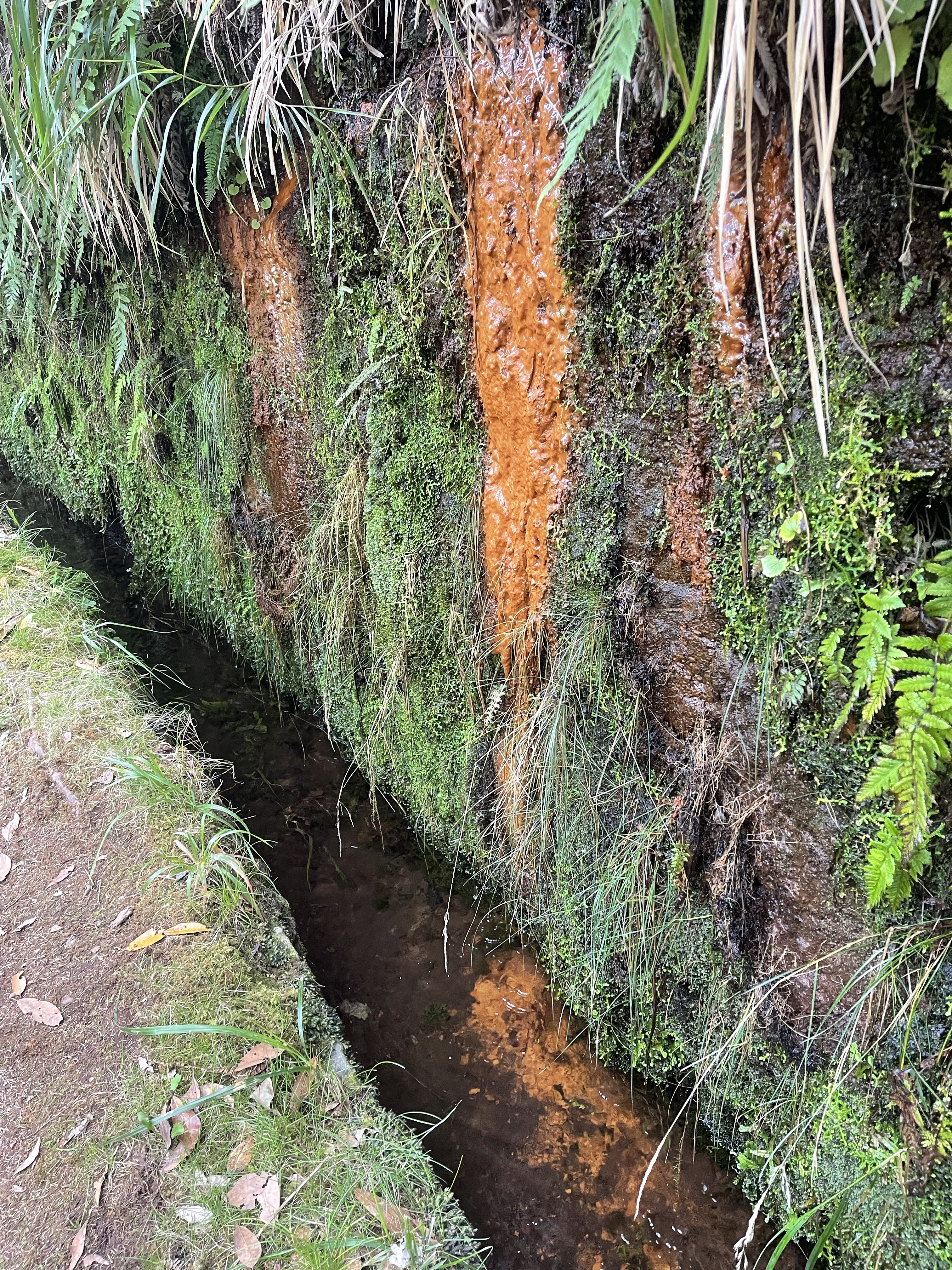


Having travelled steeply down there is now a well trodden path to this popular site and we begin to meet more people. It is a magnificent waterfall. Difficult to see the very top and impossible to see where the bottom actually goes to.
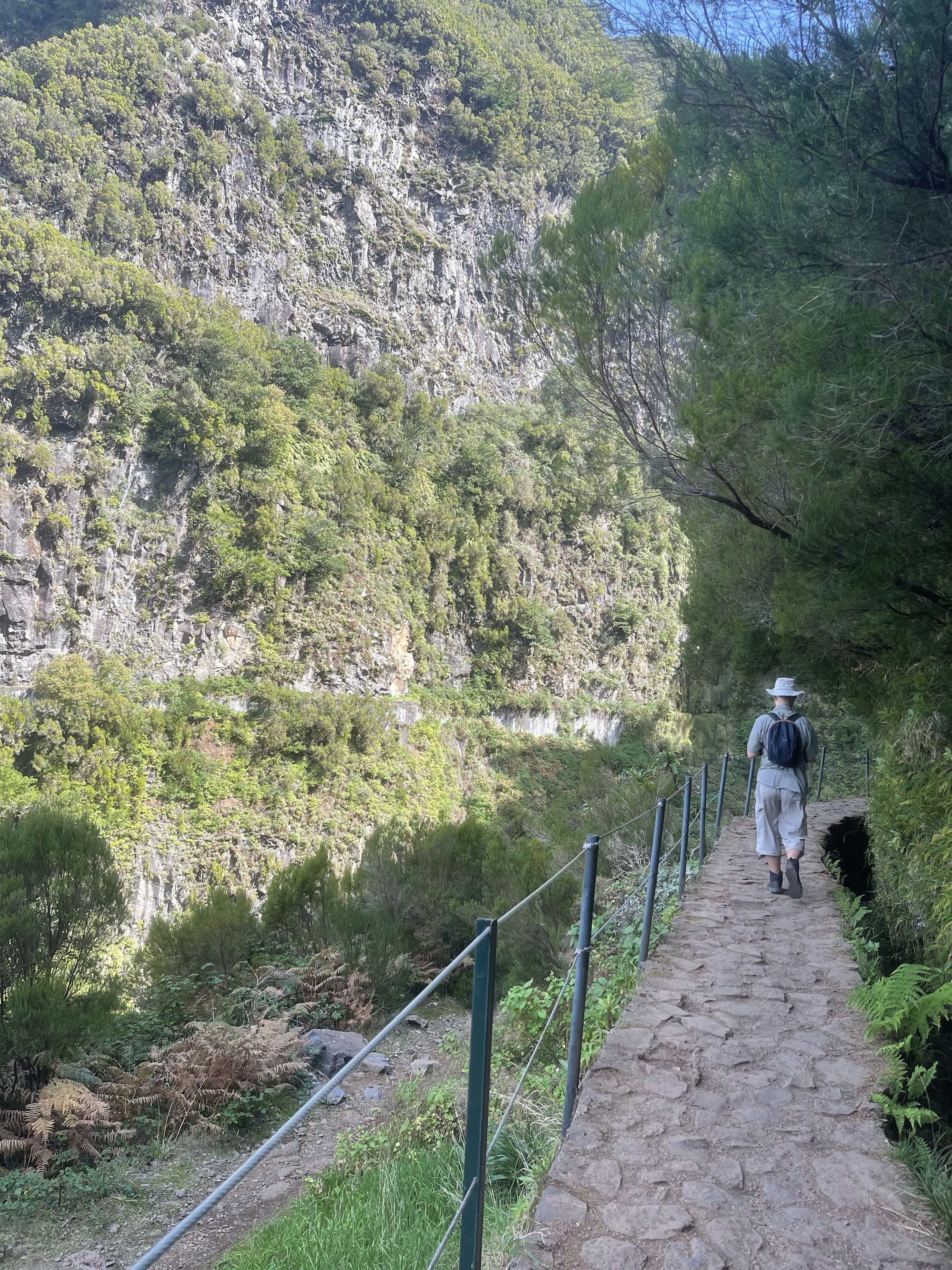
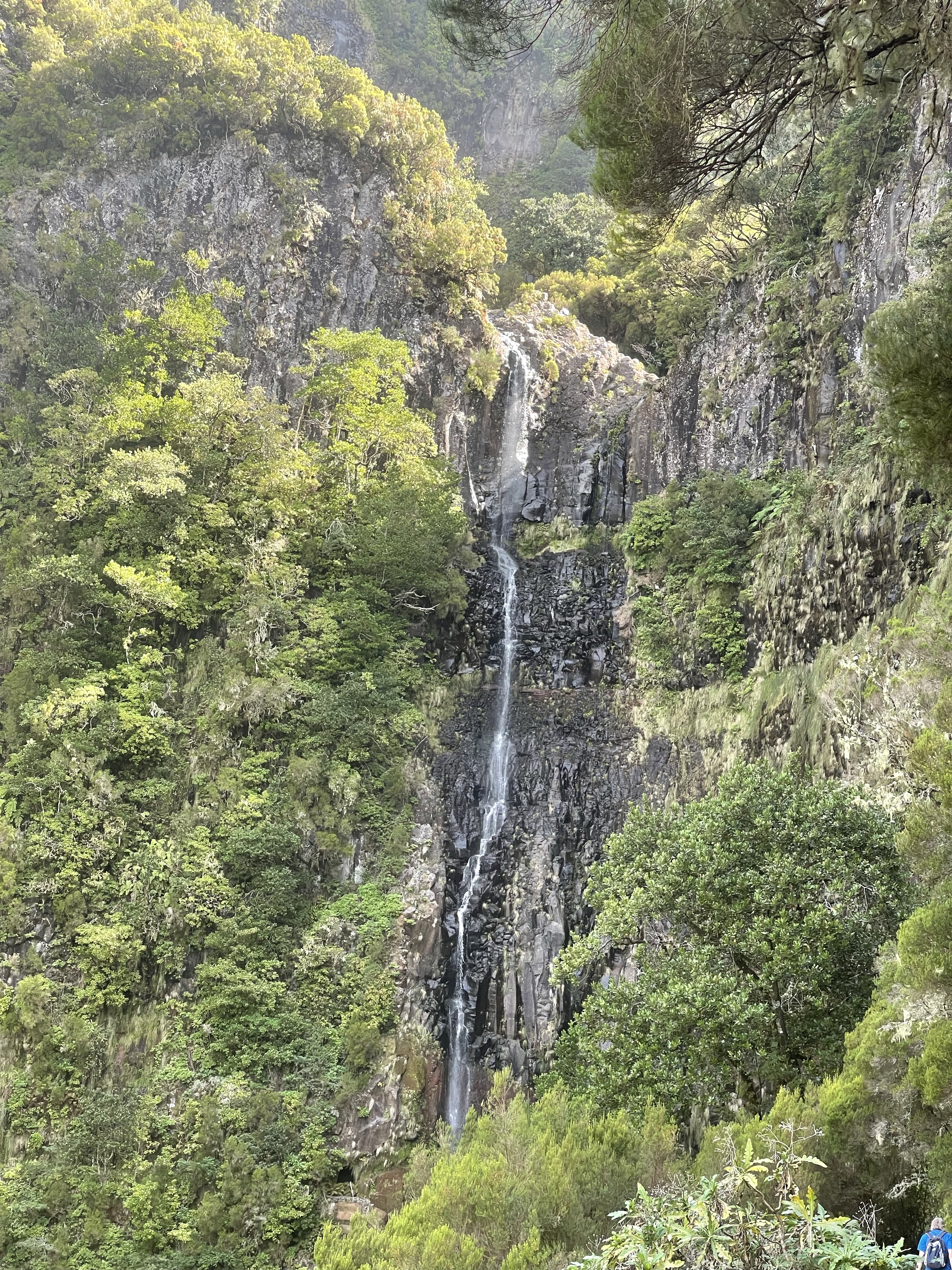
The lushness of our surroundings is very beautiful and the air is so fresh. A little bit of a compensation for the climb back up the path again and through more wooded area. The views are magnificent and the one difficulty with a group is that you often feel unable to take as many photos as you would like. The symbiotic relationship between this tree and the ferns is interesting.


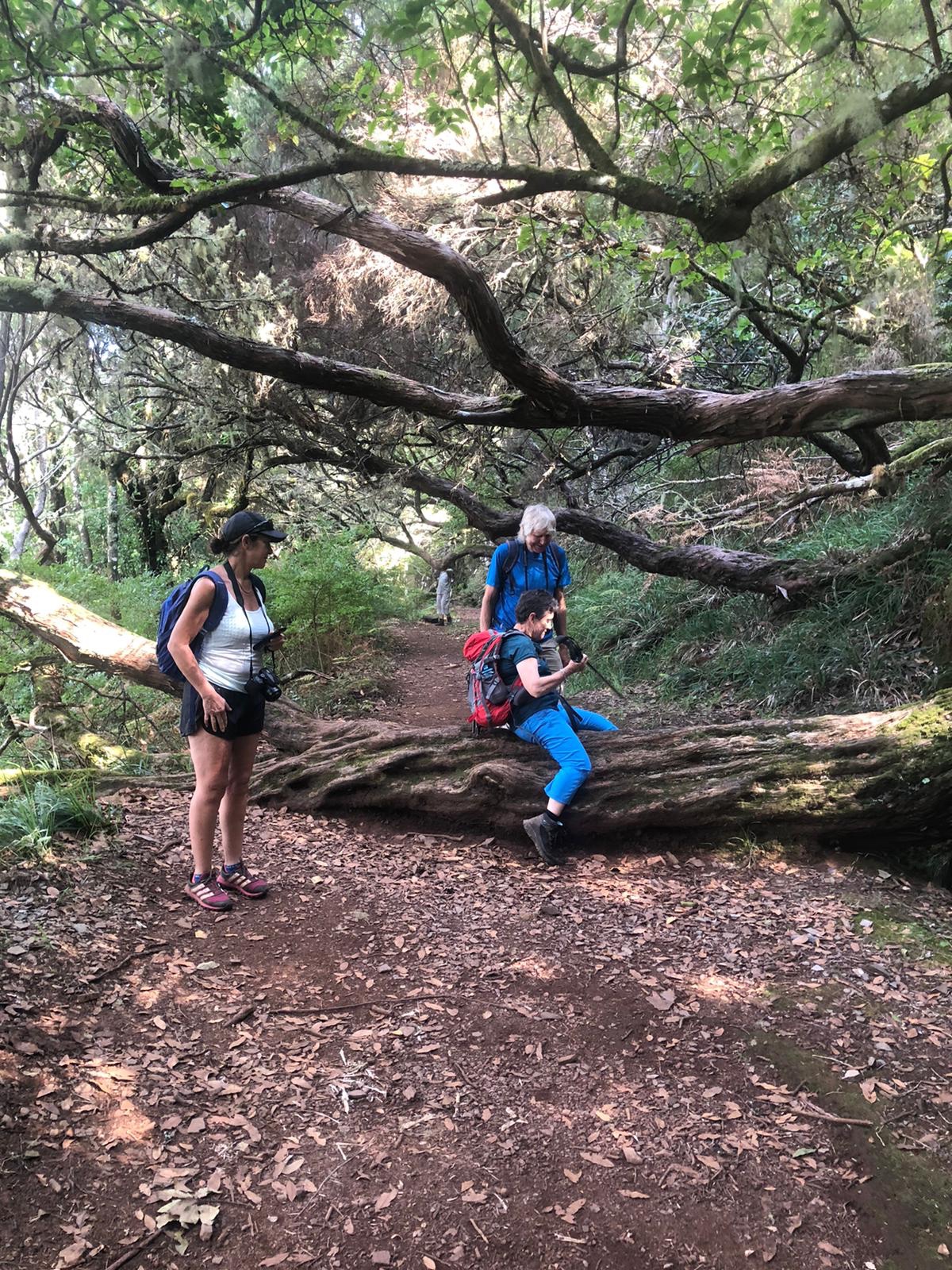
The engineering of this complex irrigation system is to be admired and adds to the fertility of the island which produces a considerable amount of sugar cane and bananas as well as vines and more domestic crops.
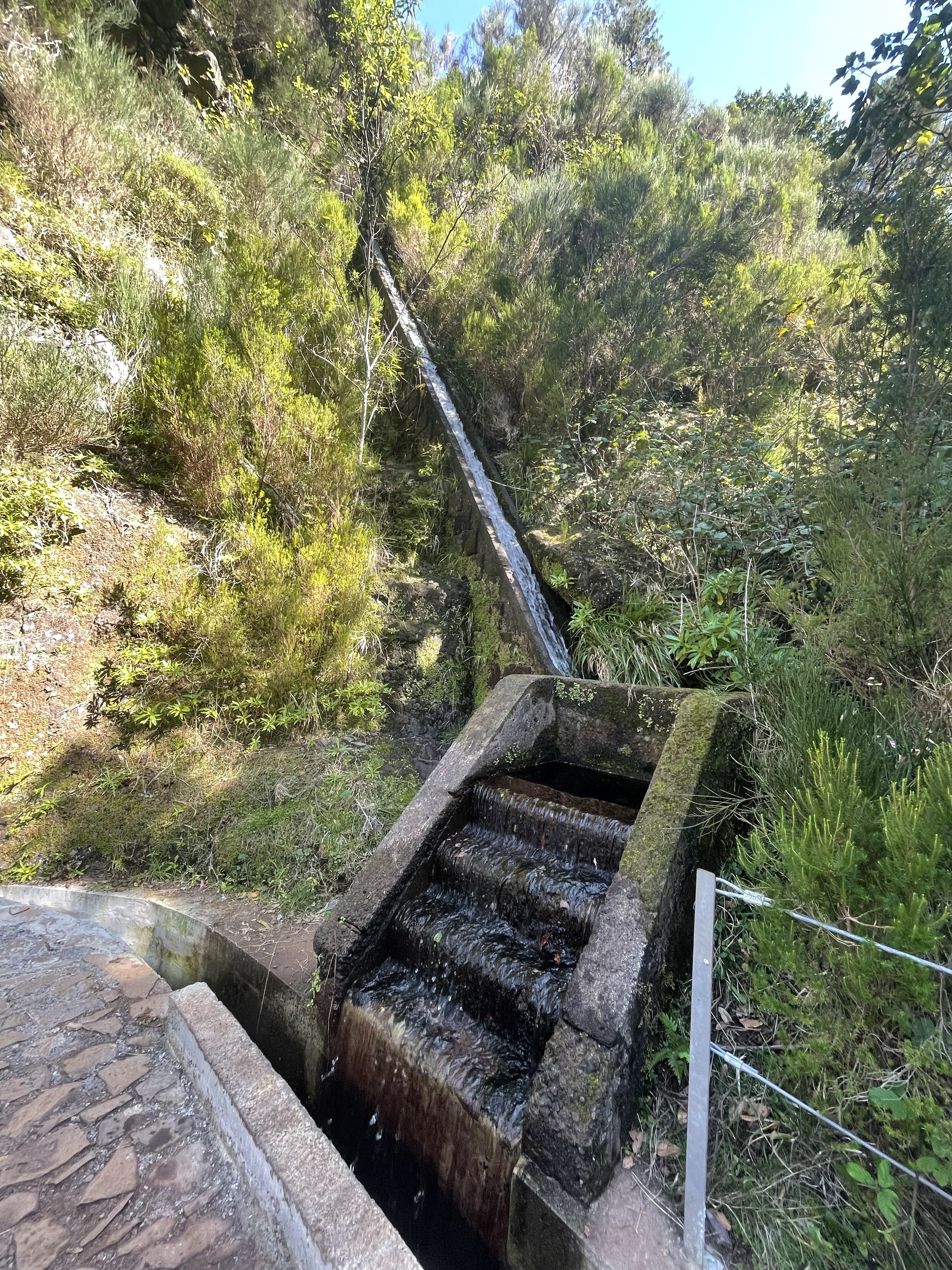
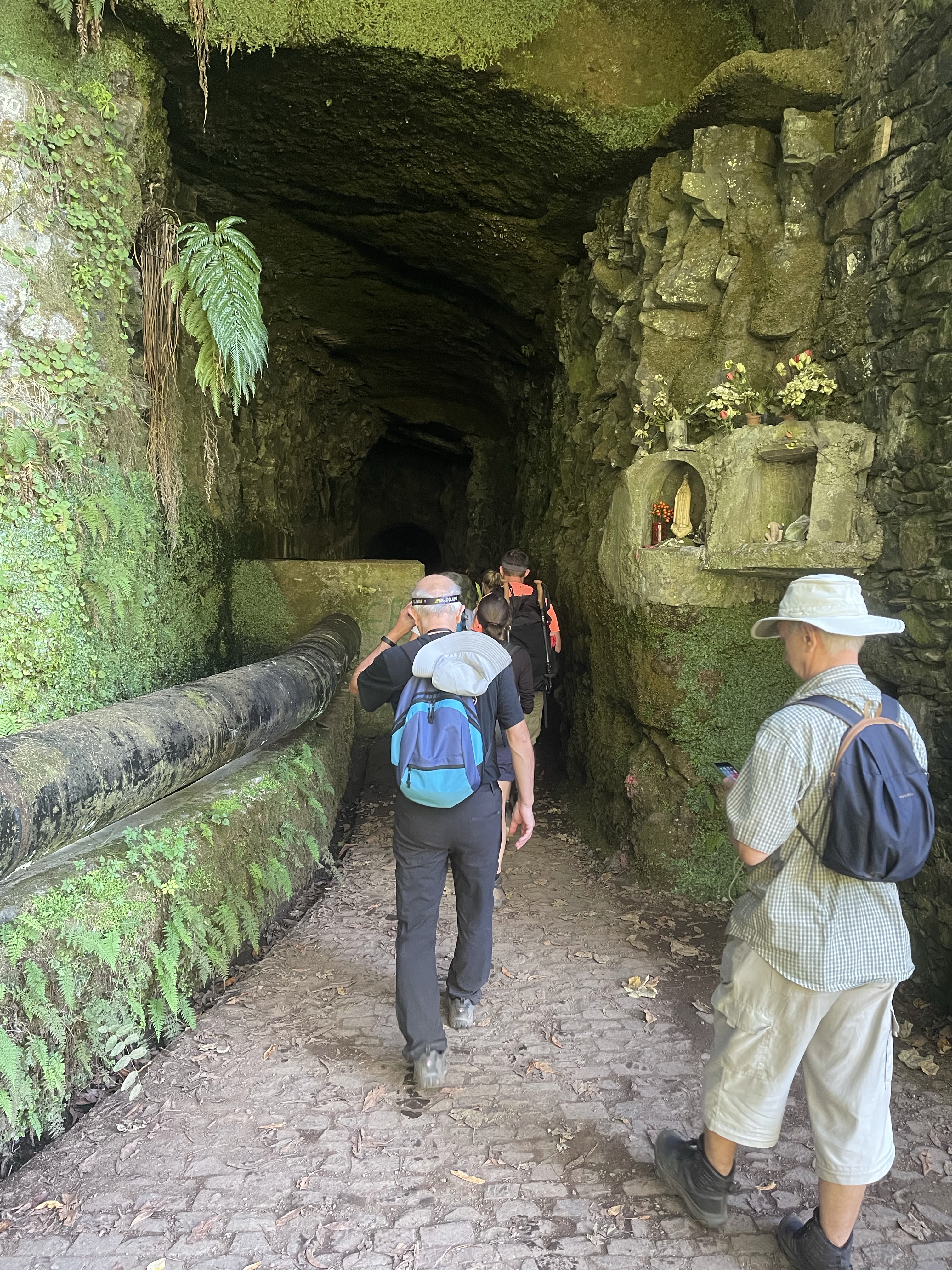
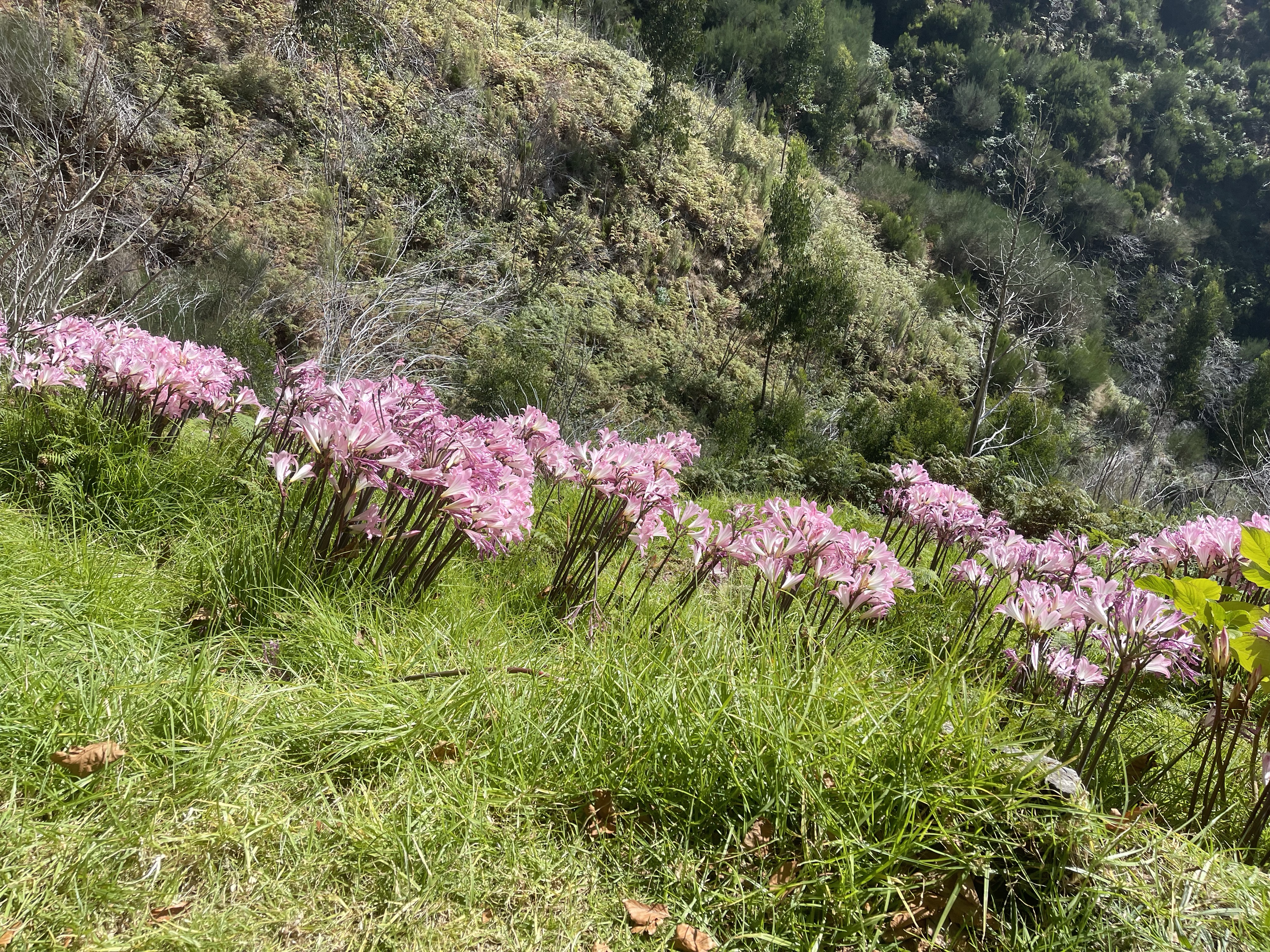
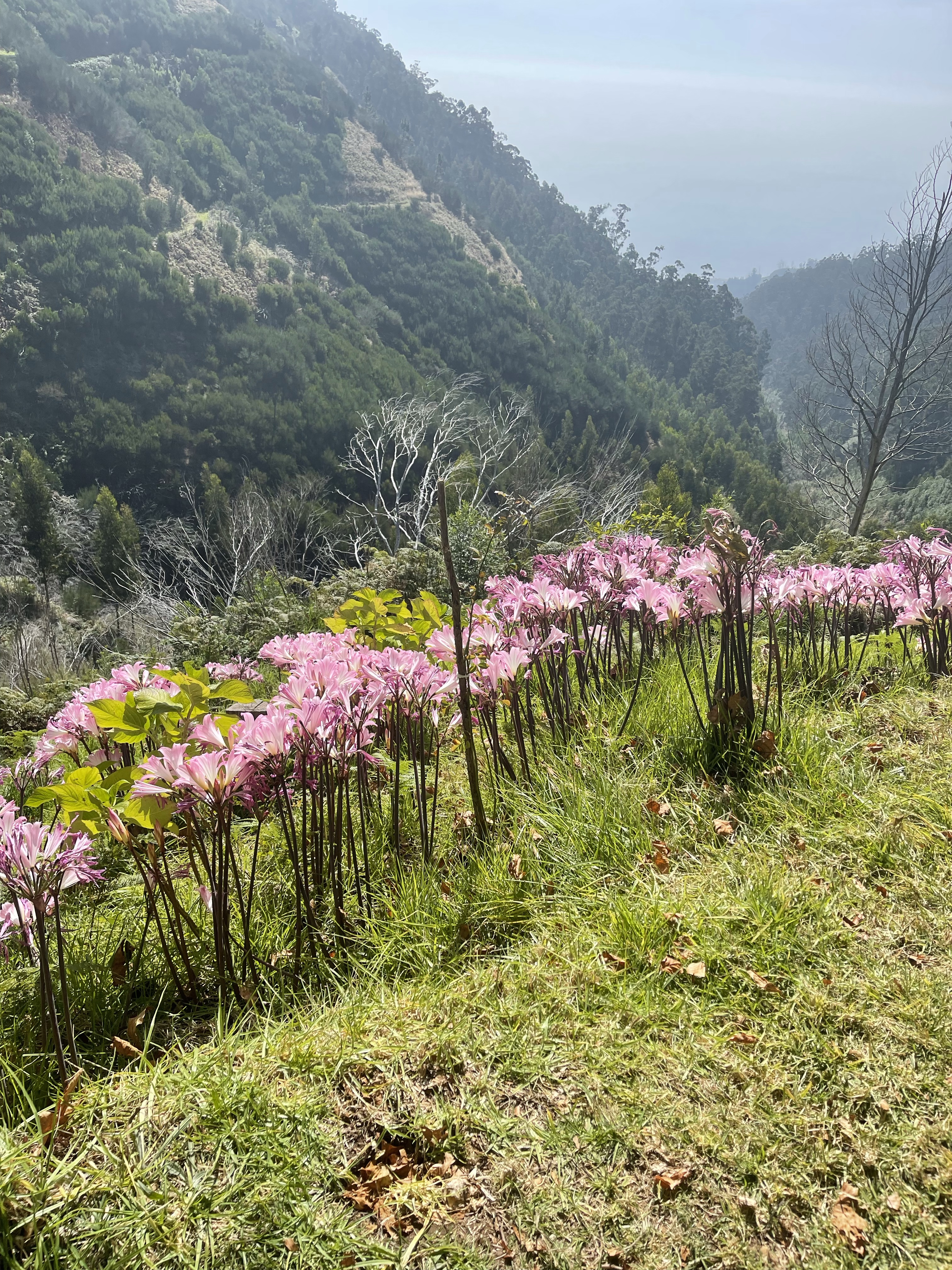
We are soon at an 800 metre tunnel under a mountain. There is an area of dedication at the entrance, luckily no rock falls or landslides during our visit! Quite wet under foot in places and with rather an ugly pipe which takes water down the mountain to a hydroelectric station. The Tunnel dos Cavaleiros takes us through to the valley of Calheta, and the site of abundant Amaryllis growing at the top of the hill.
The last section around the head of this valley before we met our minibus just into the tree line. This has been a great walk in wonderful sunshine and was about 13 kilometres long.
 Marion's 50 Walk Challenge